CYNHIA
Design Story
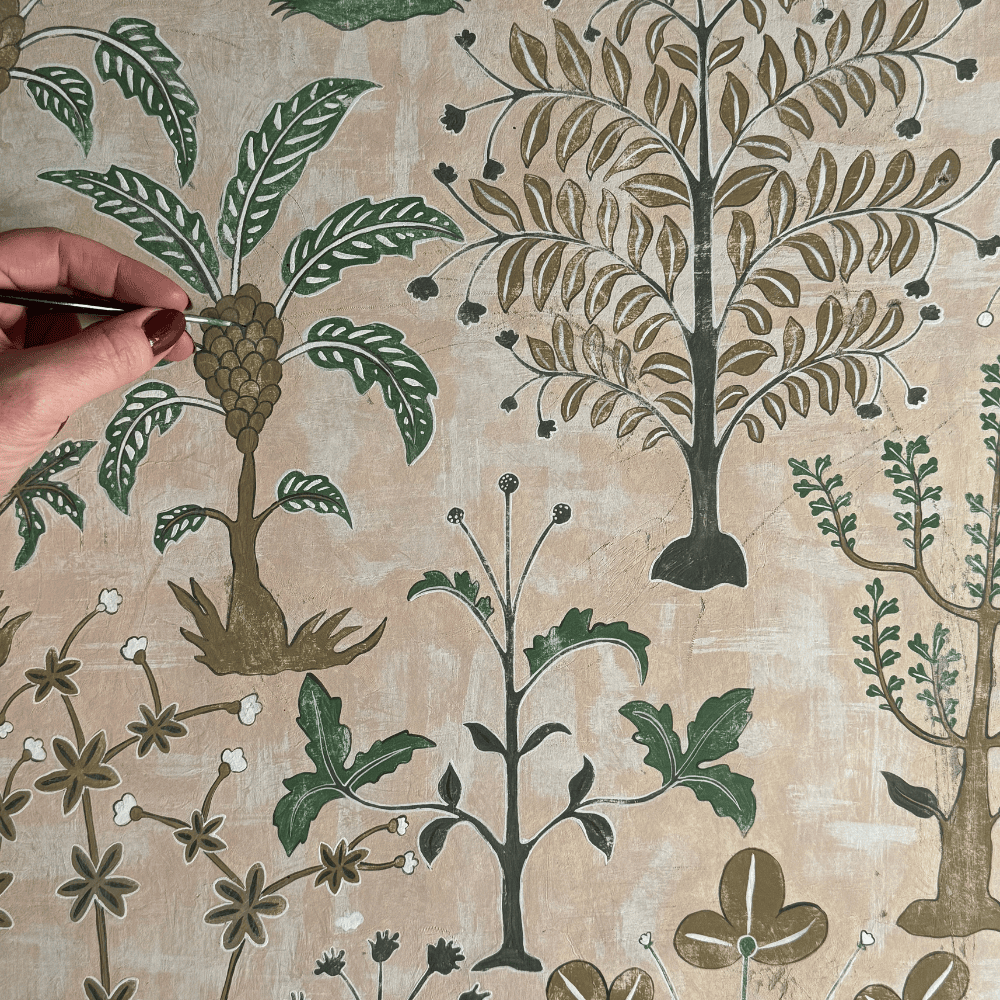
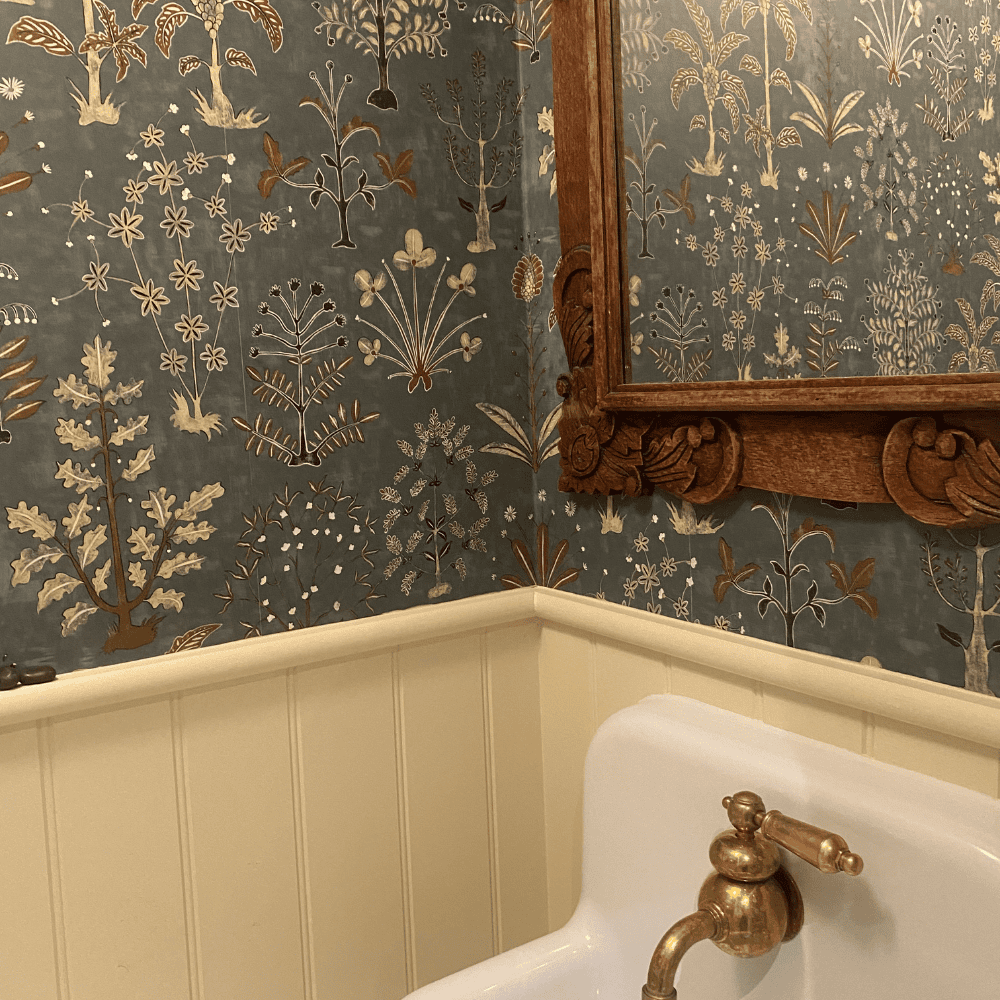
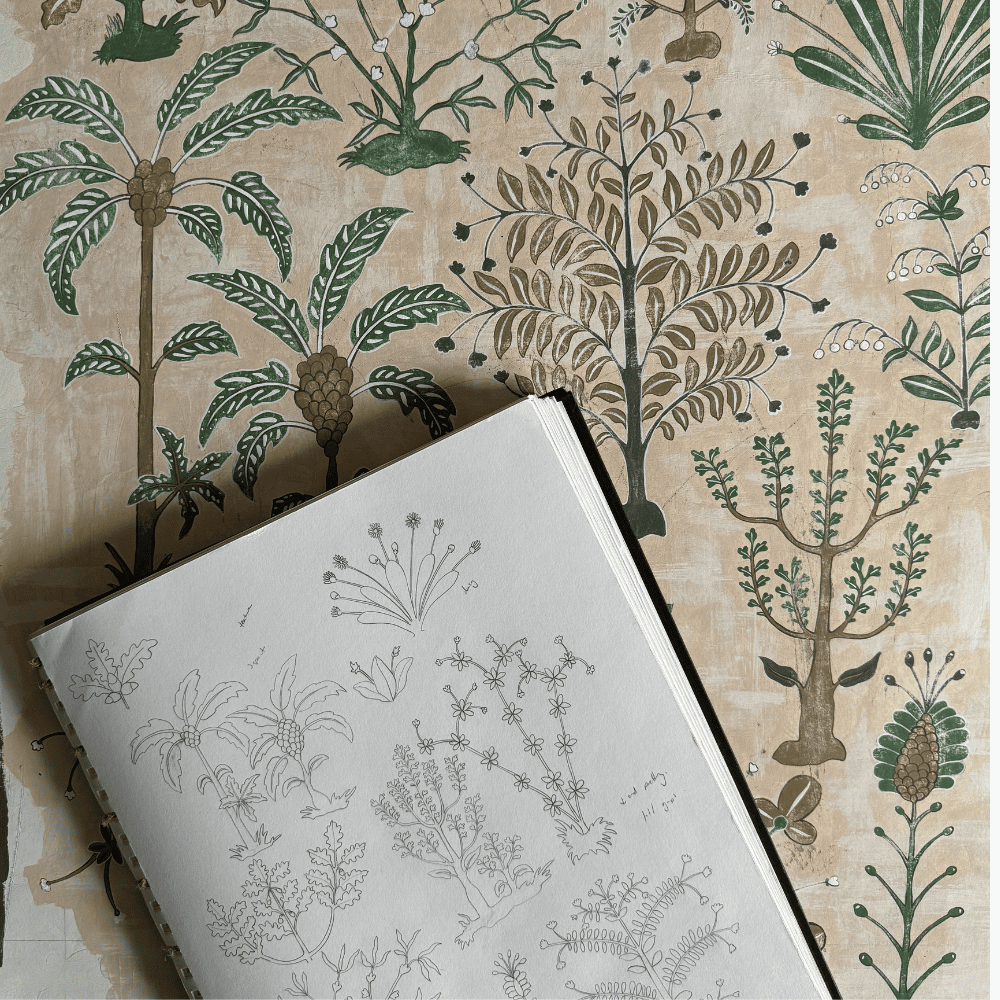
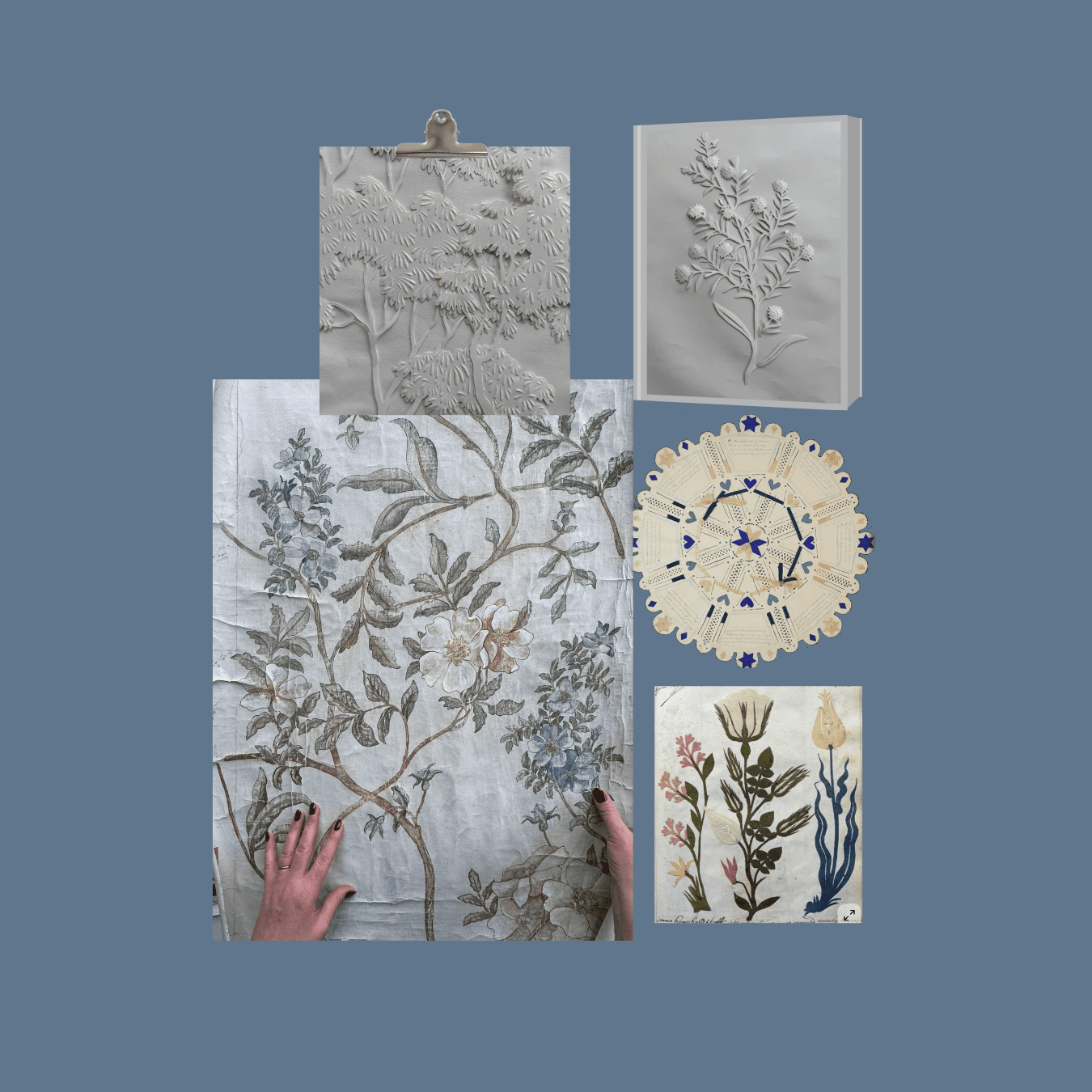
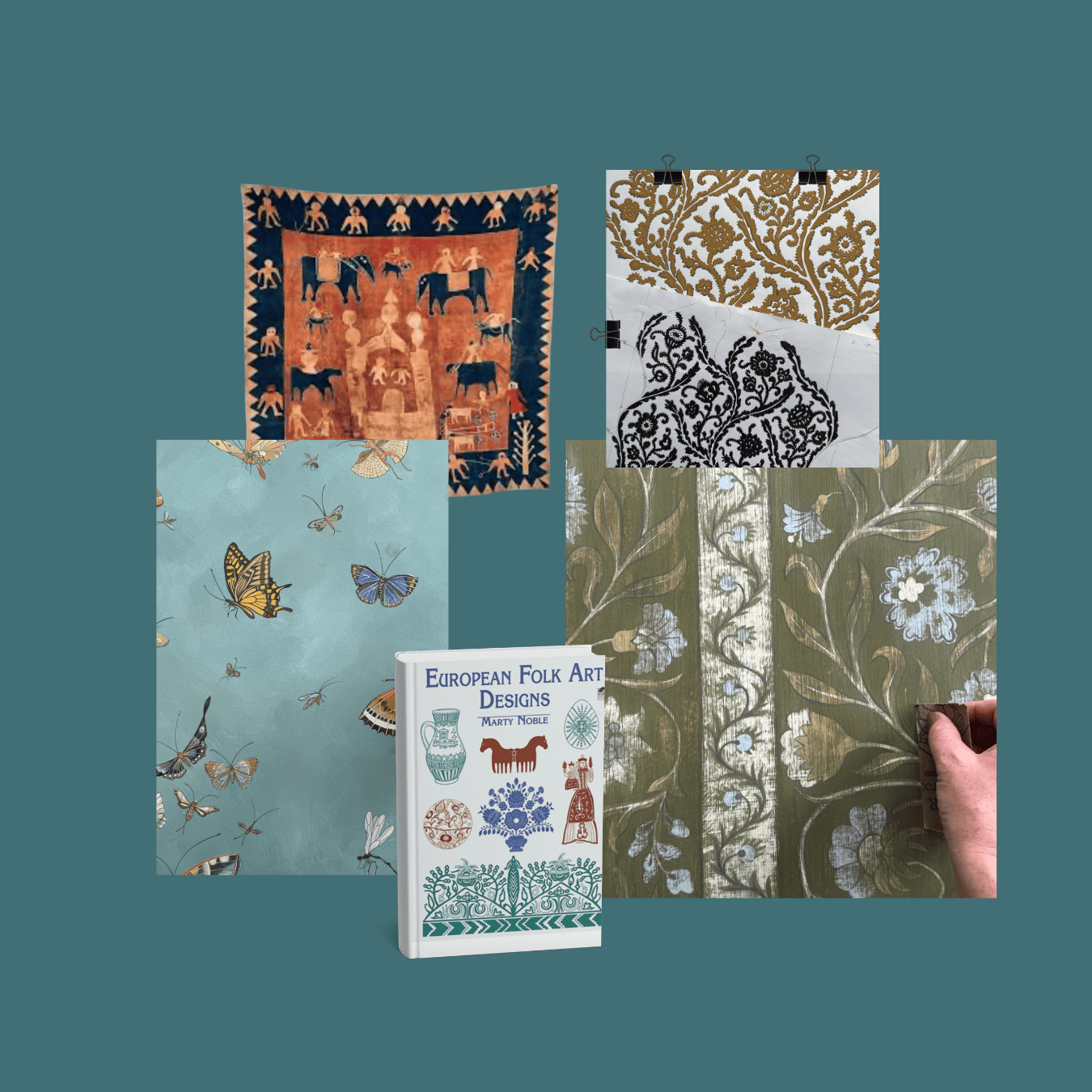
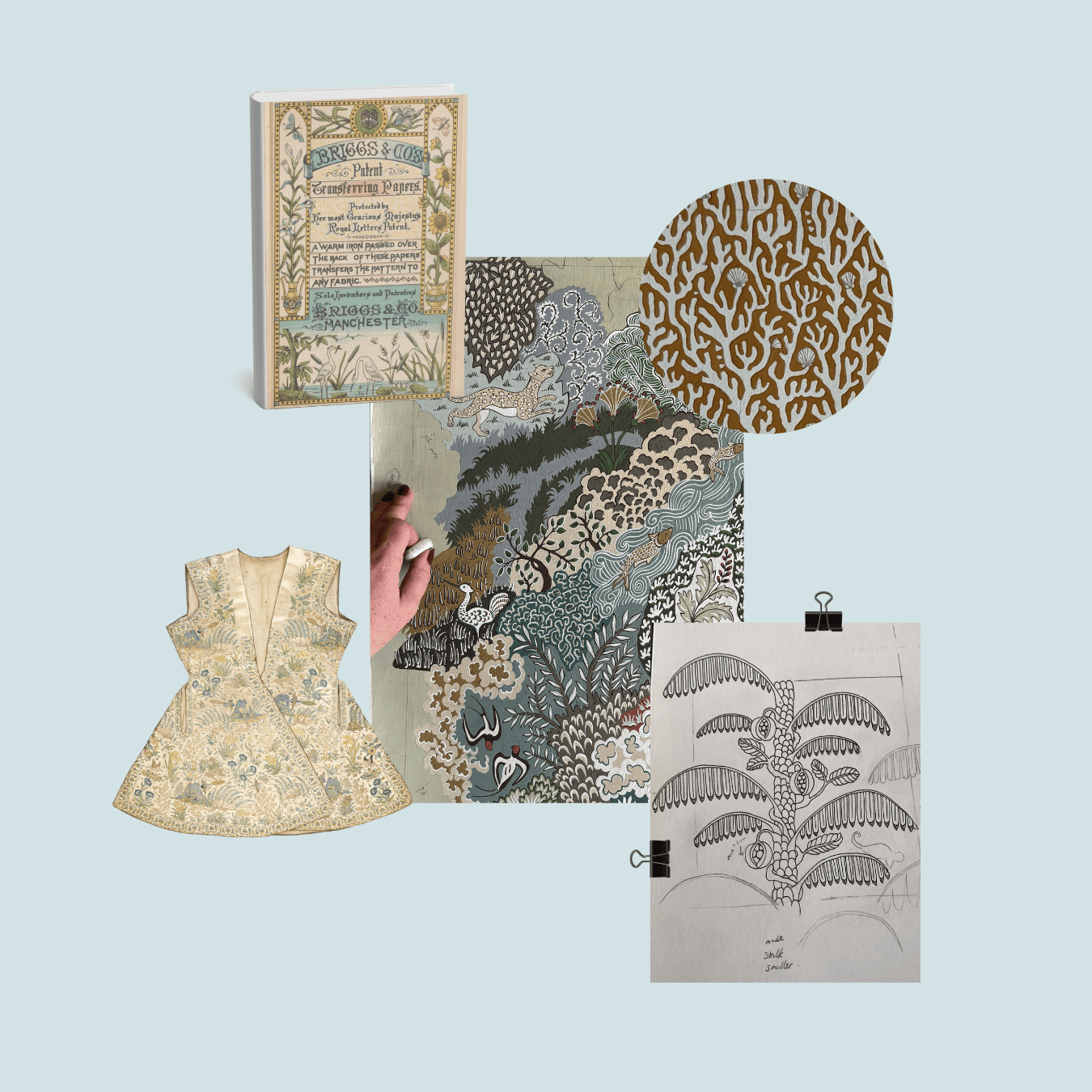
Cynthia was my first fully realised floral wallpaper. Named after my husband’s late great-aunt, who frequently encouraged me to design florals, the composition came intuitively but was refined through repeated painting. The design was built slowly by layering paint, sanding back areas, and repainting to create depth and texture. Fine hand-drawn lines define the shapes, while the negative space was carefully considered to allow the design to breathe. Floral forms were inspired by Briggs & Co embroidery transfers, reinterpreted through hand painting.
CLOUDS & BEA'S SWALLOWS
Design Story
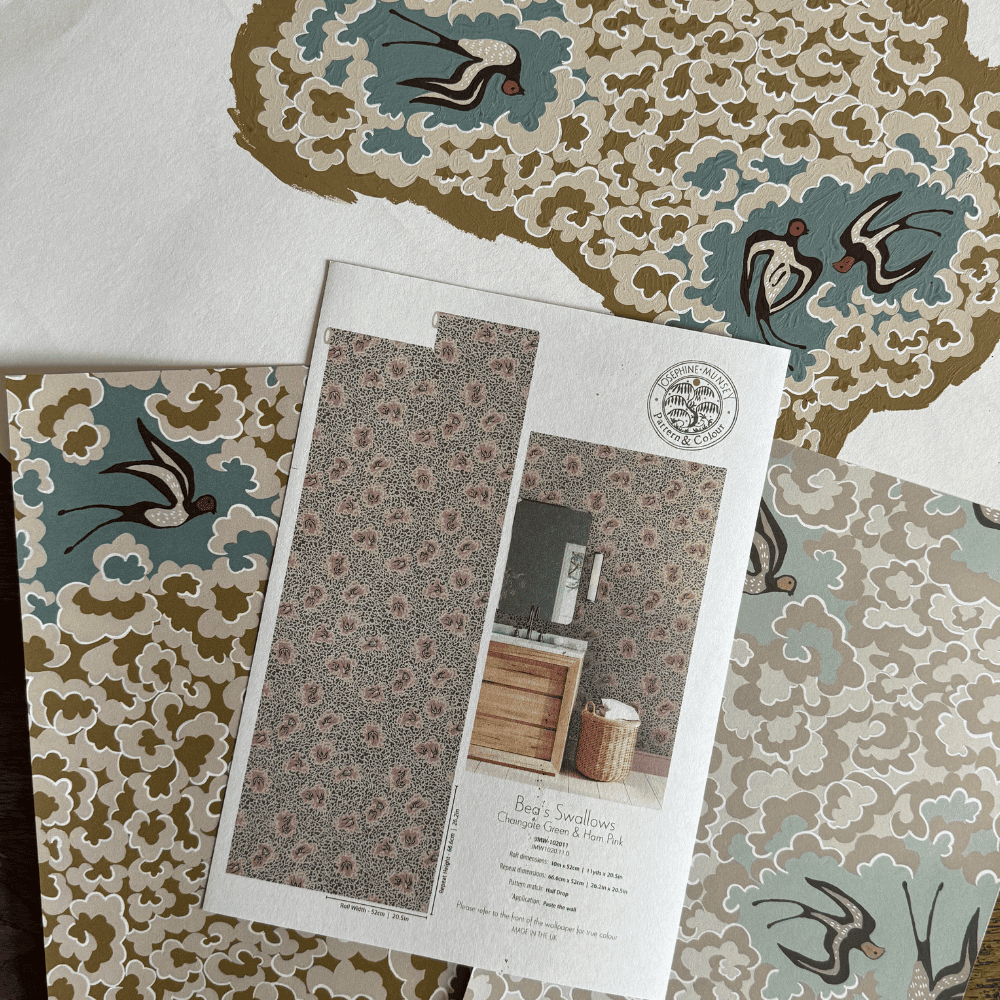
Inspired by traditional Xiangyun cloud motifs symbolising good fortune, this design is made up of small, individually hand-painted motifs arranged within a carefully balanced repeat. Although delicate in scale, the motifs were painted across a large working area so that the movement felt natural and the repeat remained unobtrusive. Areas of the design were deliberately painted out and reworked to avoid obvious repetition. The wallpaper is hand painted in three colours and designed to be subtle, versatile, and easy to live with.
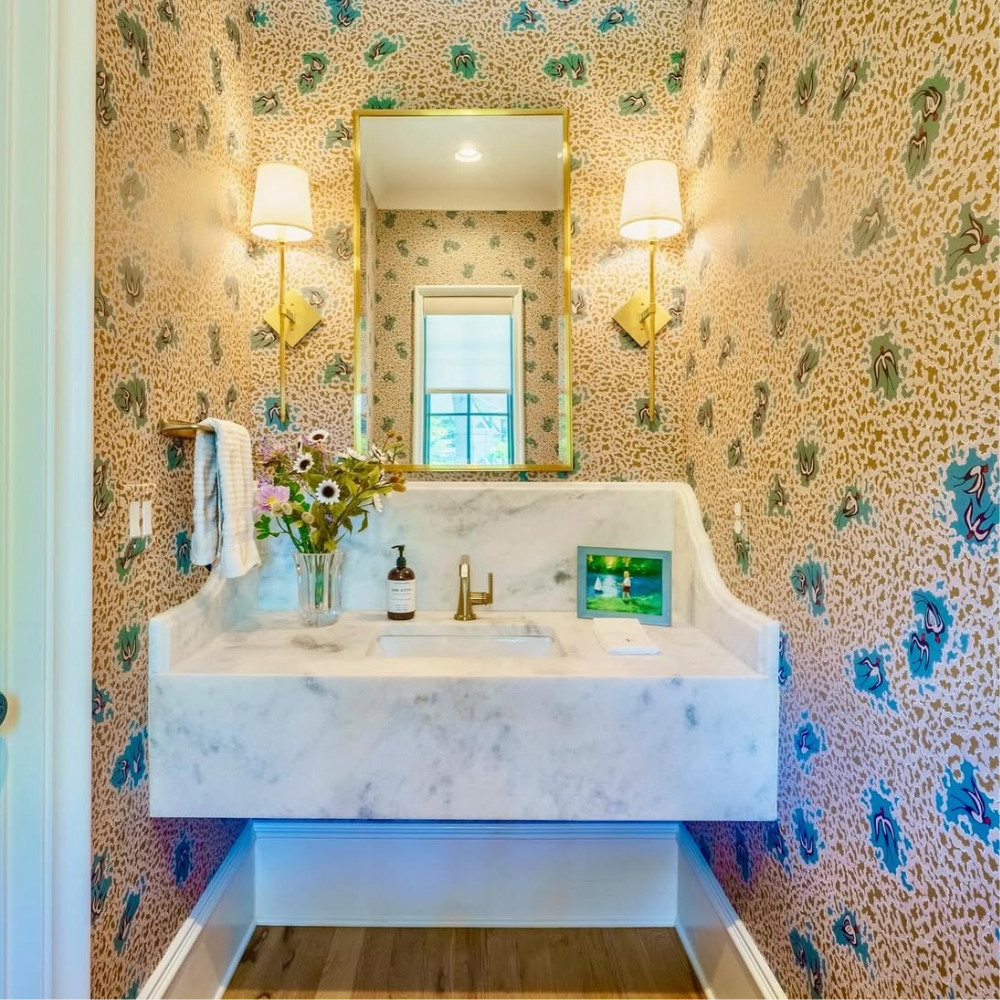
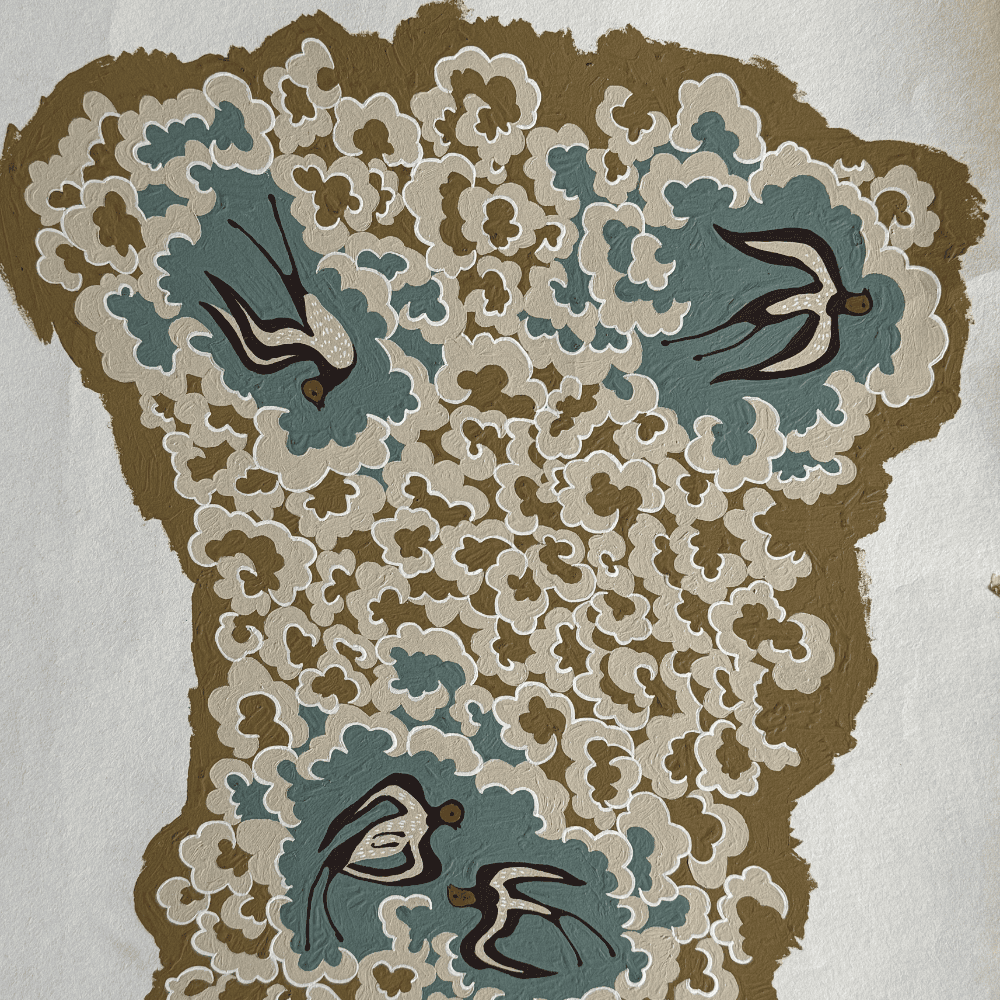
Named after my niece, Bea’s Swallows features hand-painted swallows playing amongst parted clouds. Many painted versions of the birds were explored before the final forms were selected. The clouds were adjusted and softened to allow the swallows to sit naturally within the design. Painted by hand throughout, the wallpaper shares the same colourways as the Clouds design and was created to be used alongside it, allowing for cohesive interiors across walls and ceilings.
CHAMELEON TRAIL
Design Story
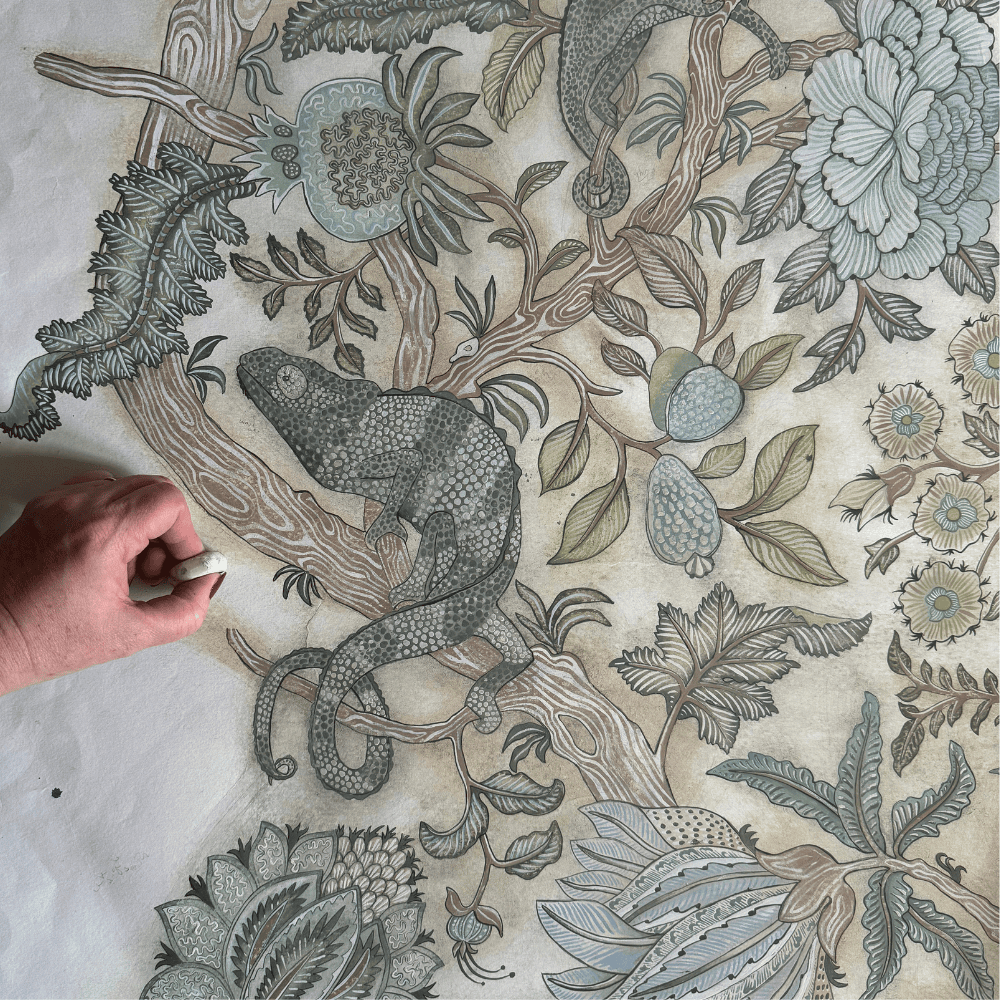
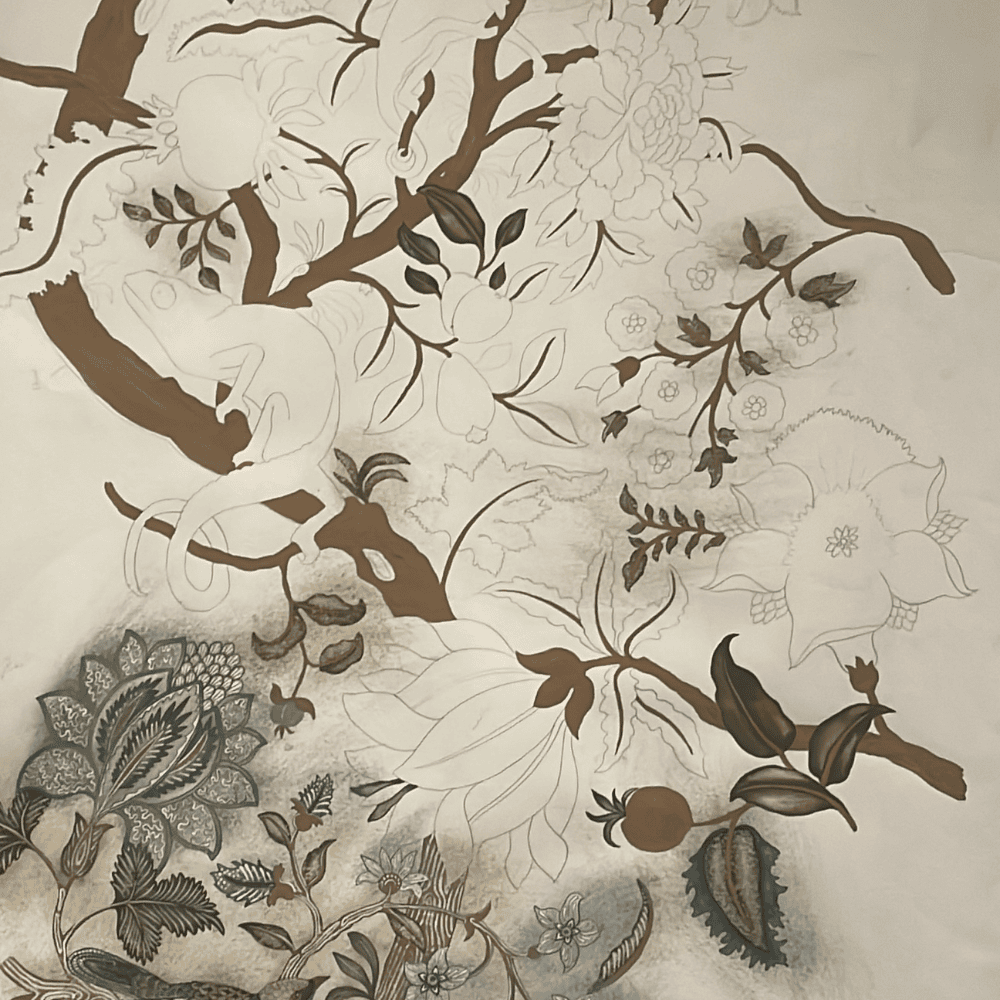
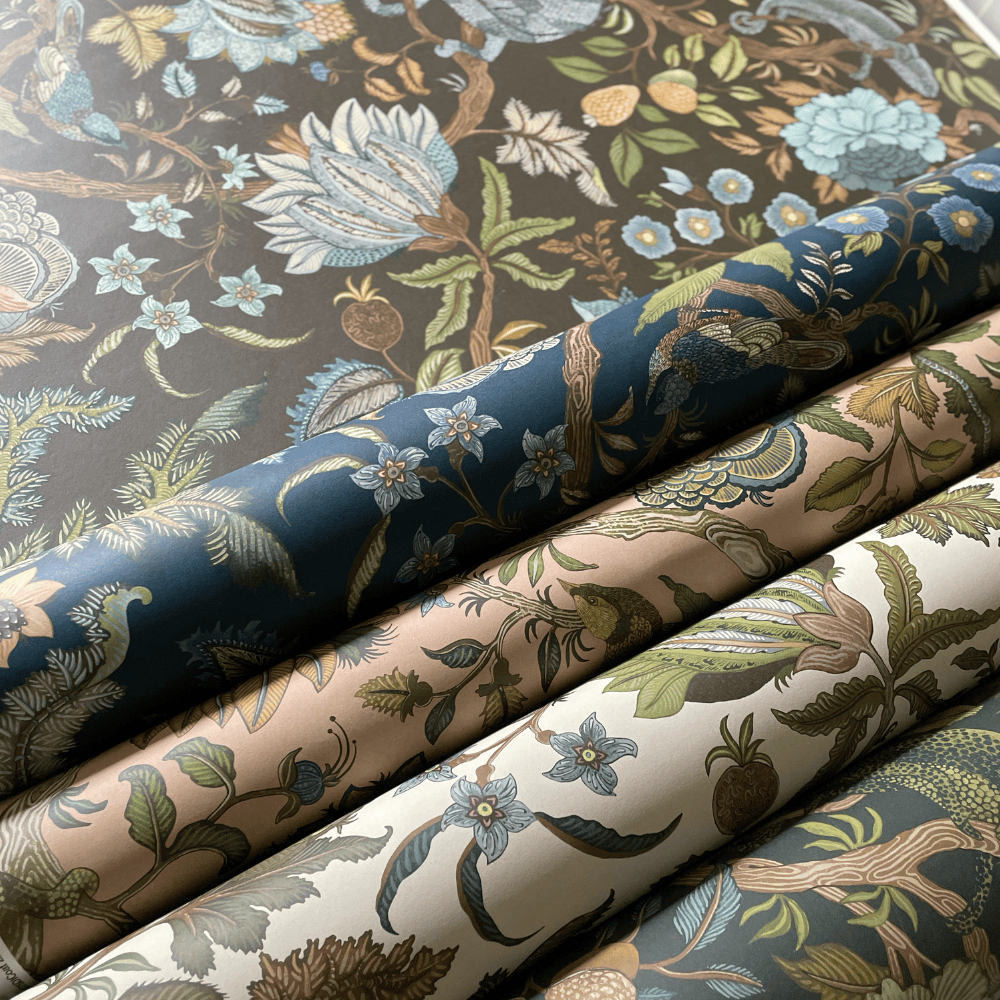
Chameleon Trail is a large, hand-painted repeat featuring chameleons woven through traditional floral forms. This design took the longest to paint, due to the scale of the repeat and the level of detail required. Motifs were informed by historic textiles, while the chameleons reference botanical illustration. Texture was built through multiple layers of paint, sanding back, and repainting, allowing colours to blend and settle into the surface. Numerous layouts and sketches were made before the final painted version was resolved.
PALM STRIPE
Design Story
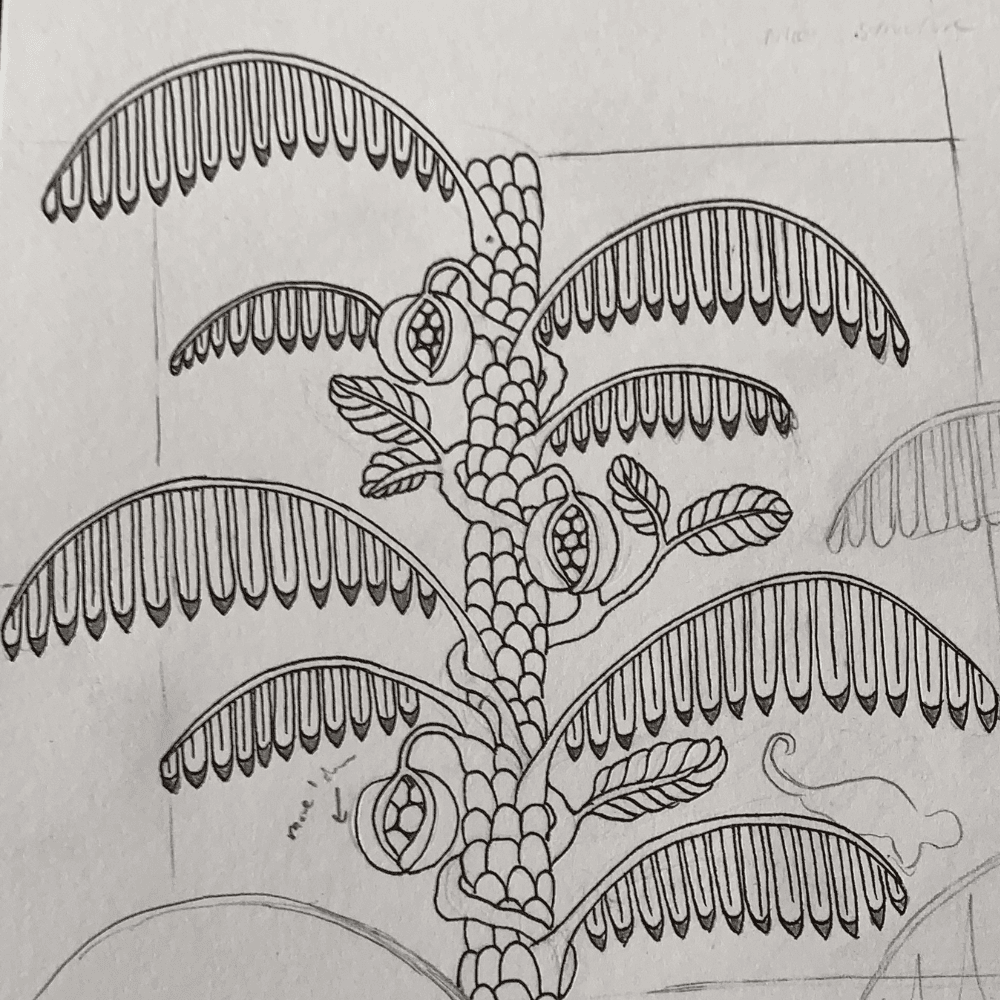
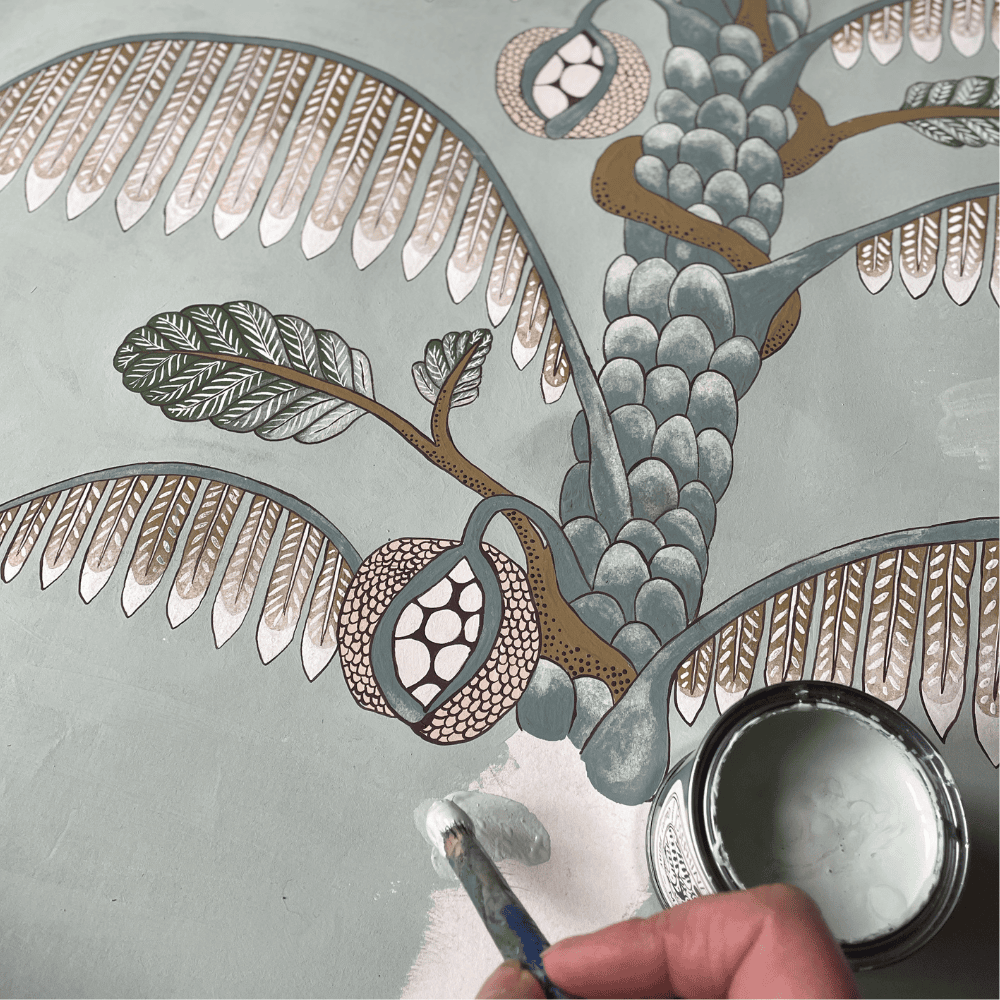
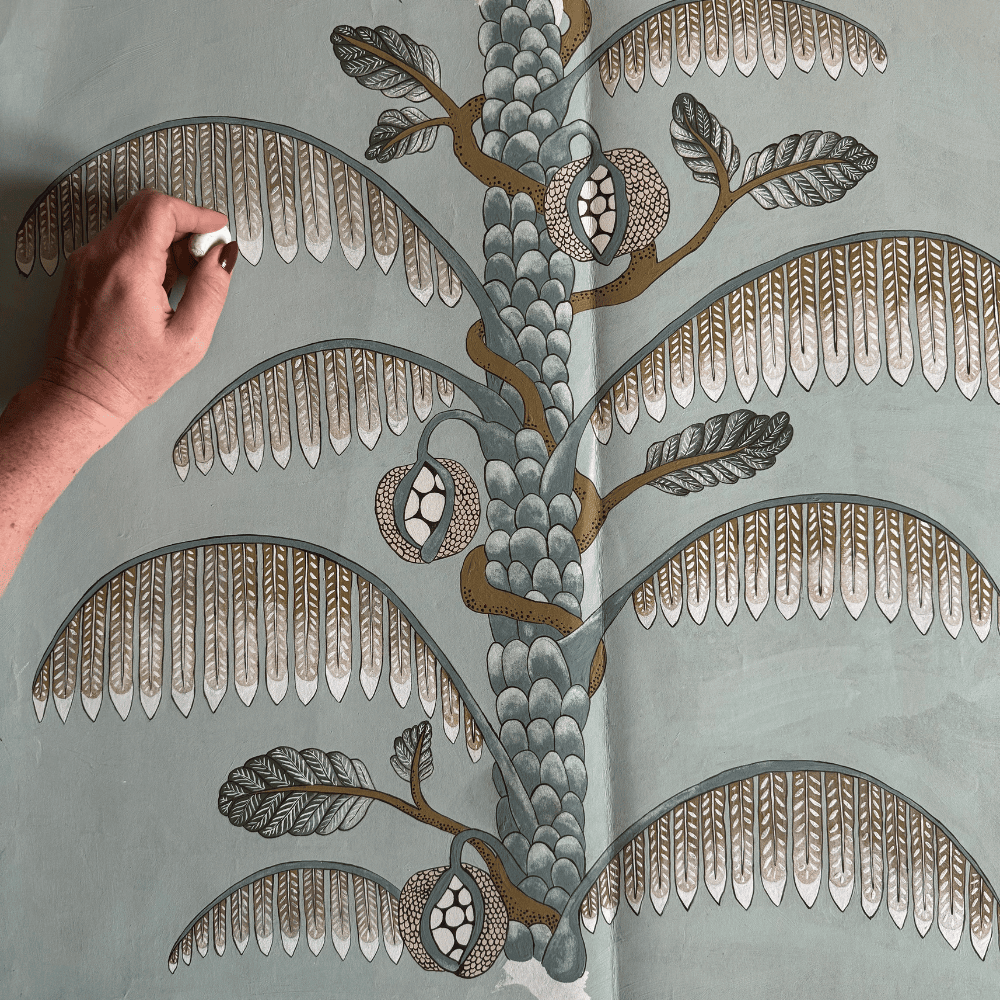
Palm Stripe evolved through extensive hand-drawn and painted experimentation. The design did not begin with a fixed image, but with organic, flowing marks that were refined over time. More than twenty painted versions were produced before the final composition emerged. The leaves were hand painted with subtle gradients to introduce softness and depth to the linear structure. While the final painting was completed relatively quickly, the development of the design reflects many weeks of work and years of sketchbook exploration.
WHIMSICAL CLUMPS
Design Story
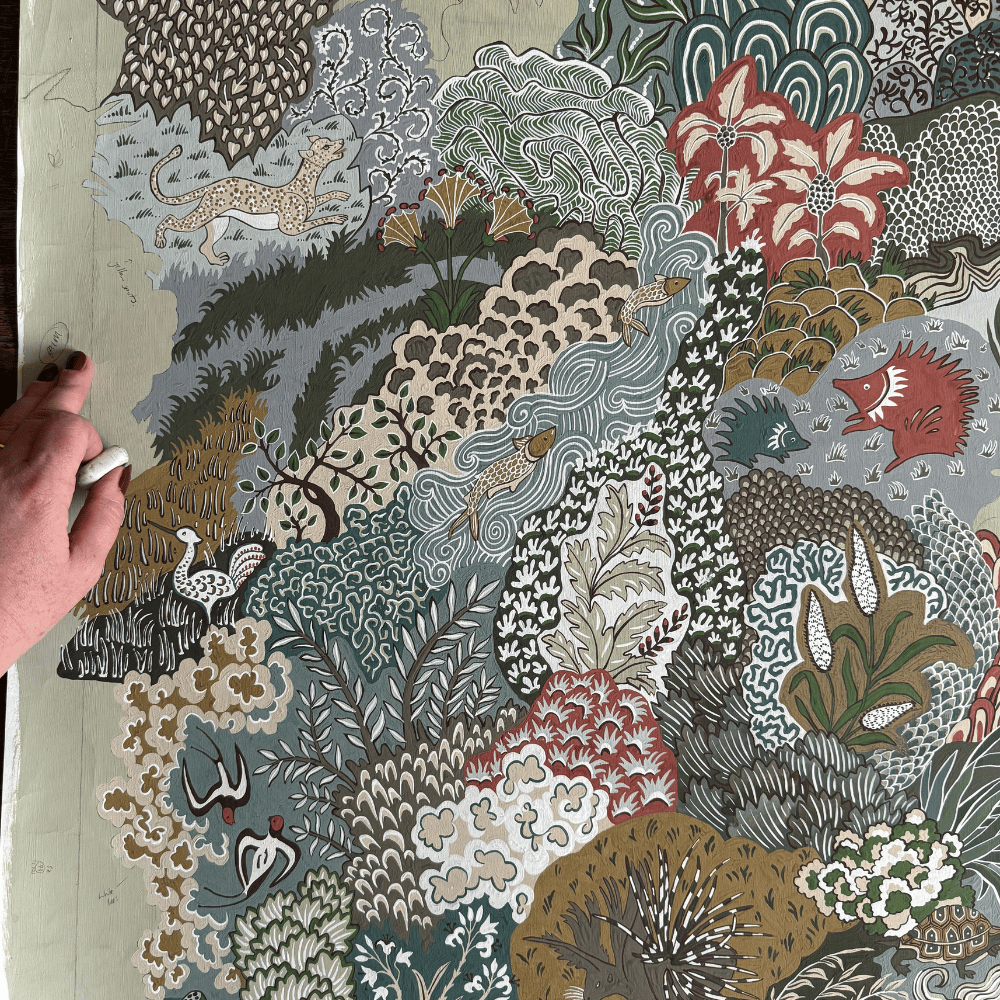
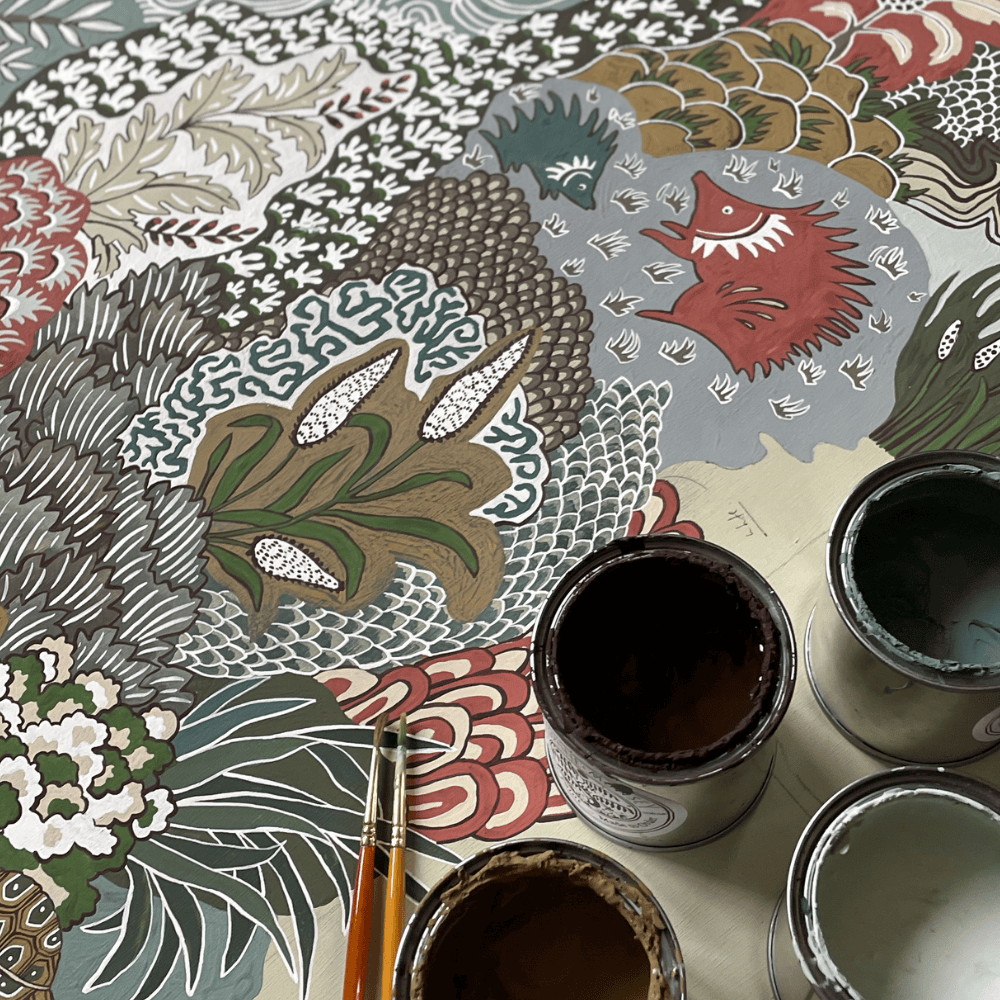
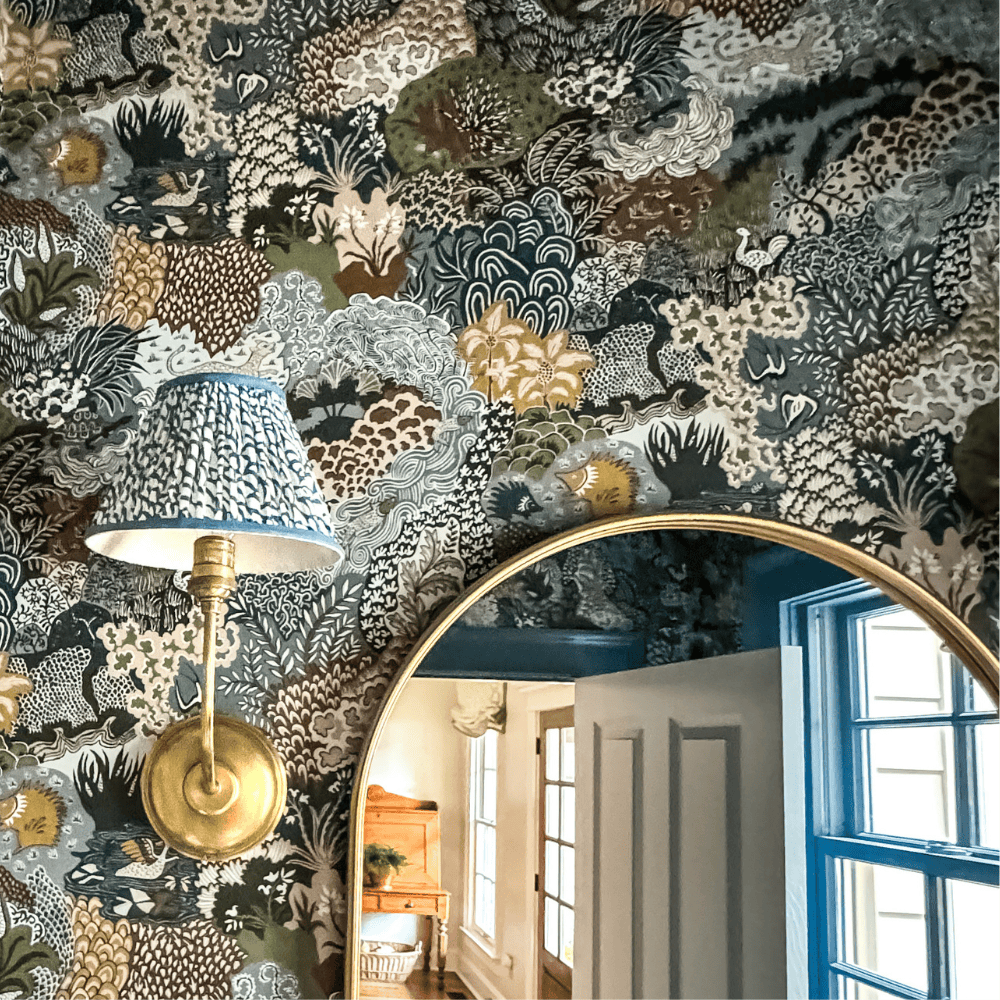
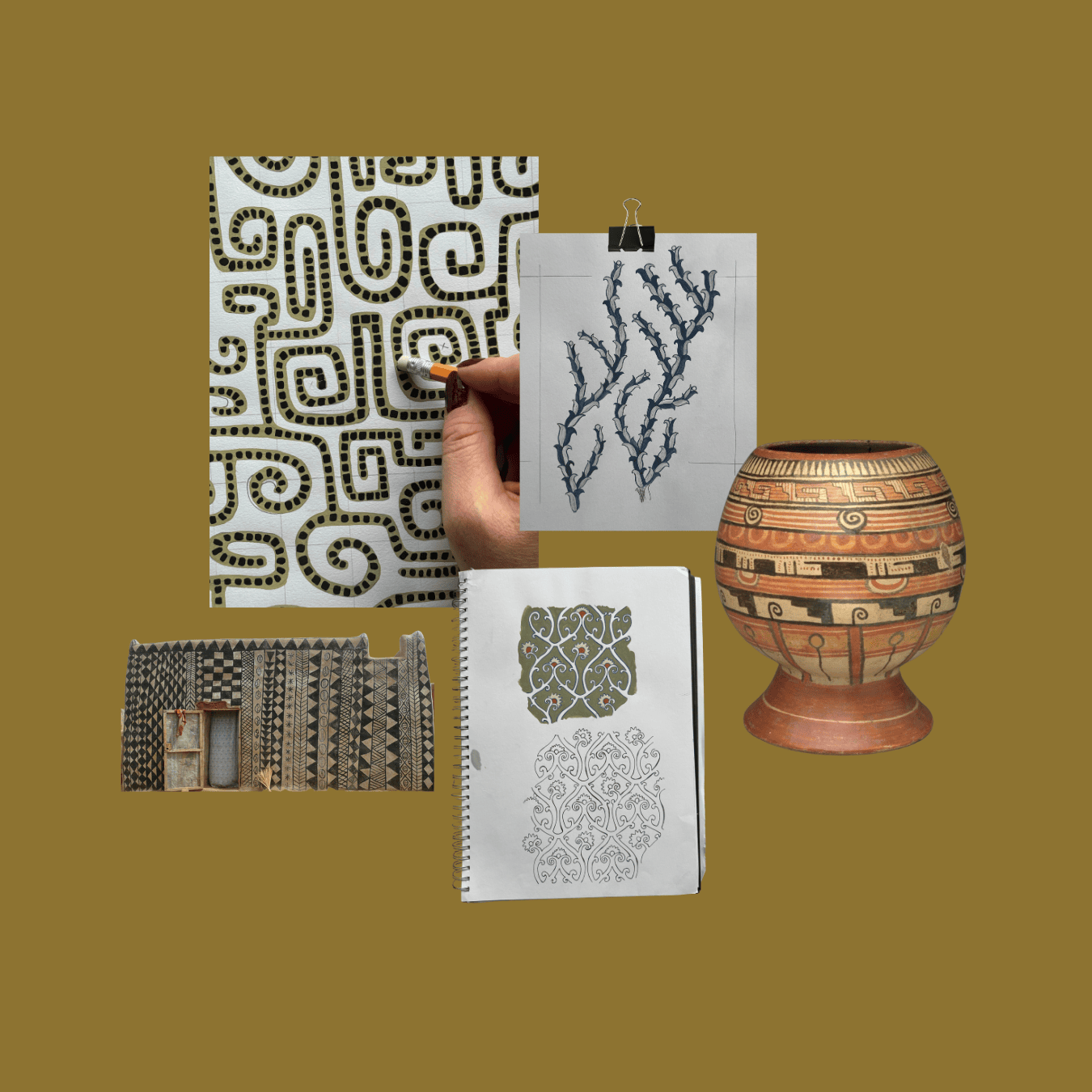
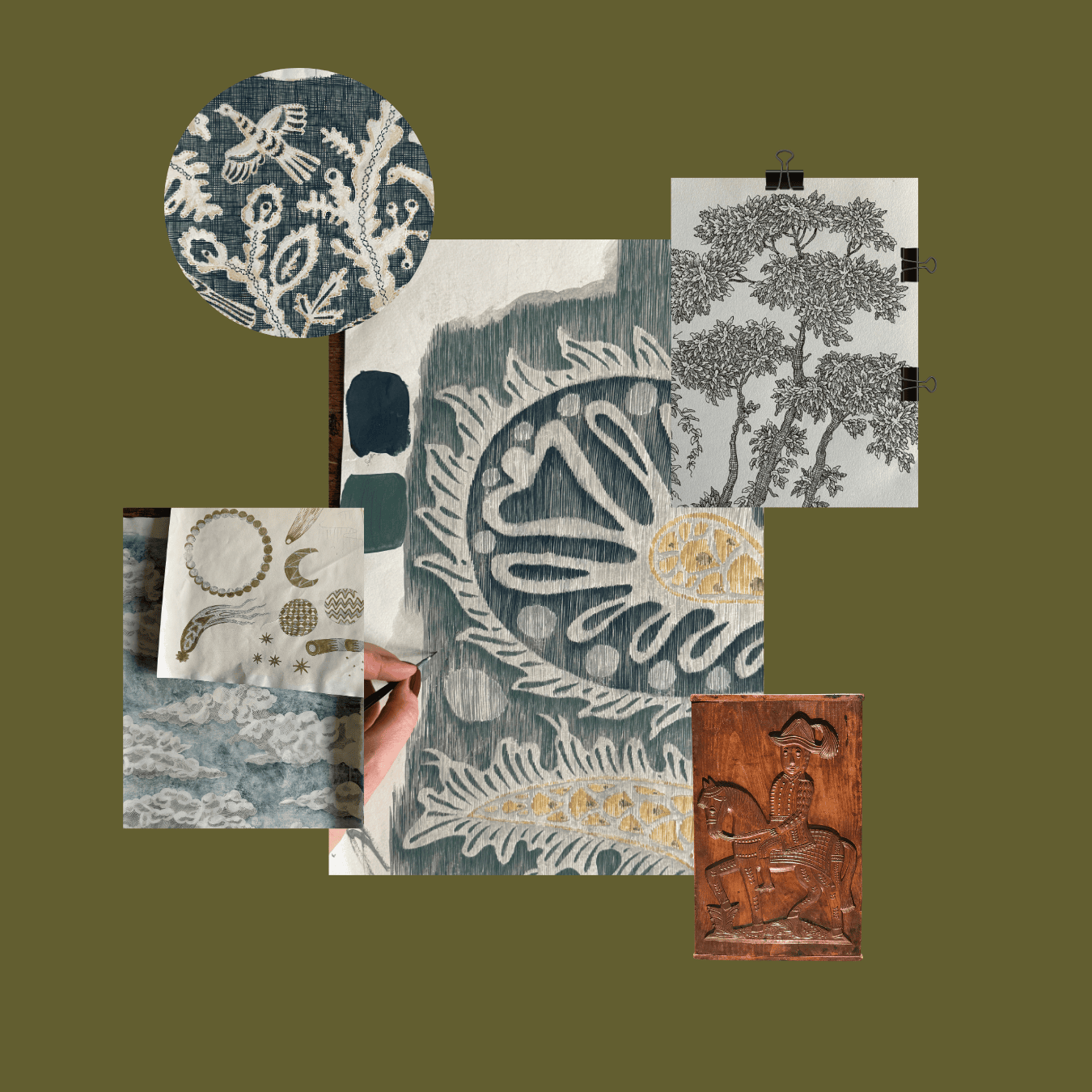
Inspired by historic tapestry designs and the playful, symbolic work of Asiru Olatunde, Whimsical Clumps is made up of imagined organic forms including leaves, waves, animals, insects, and flowers. The design was painted entirely by hand using emulsion, giving the surface a flat, chalky finish. The process was deliberately slow and exploratory, allowing forms to develop naturally. Dark, earthy colours were chosen to anchor the playful motifs in a sense of nature and tradition.
CORAL
Design Story
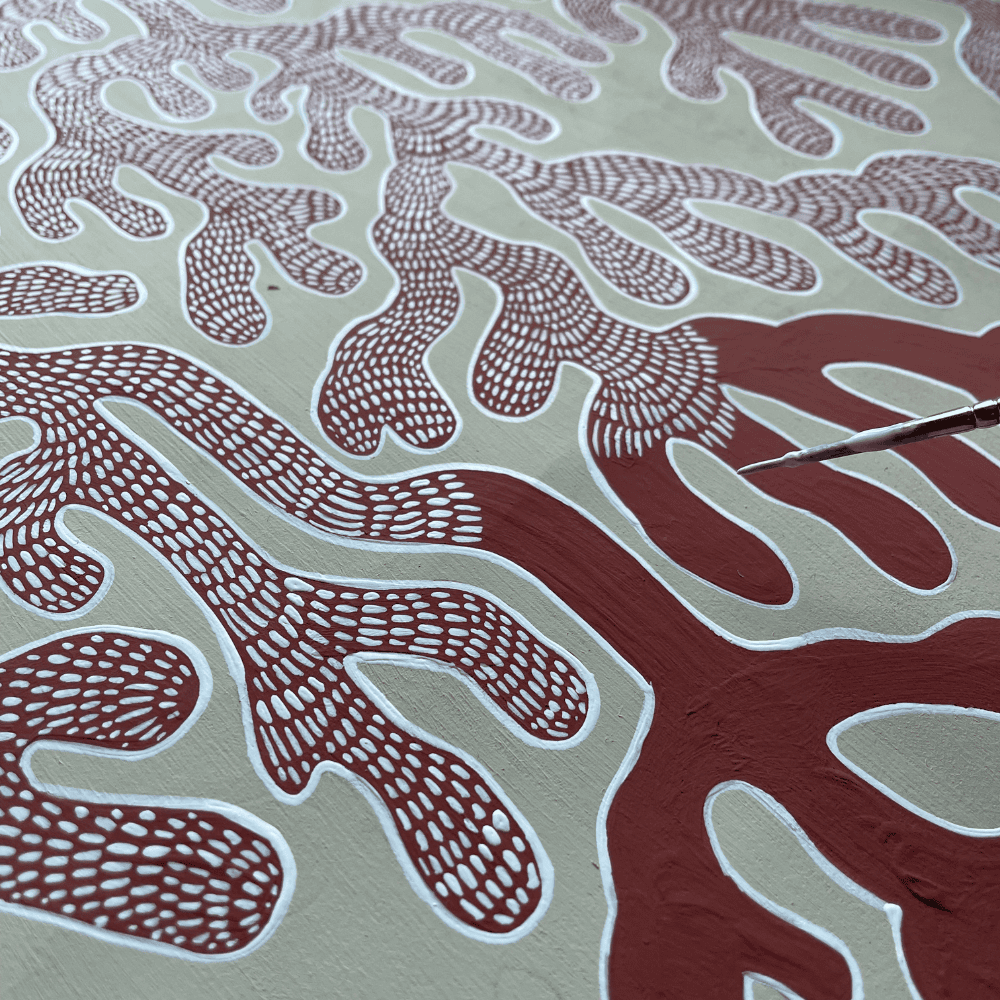
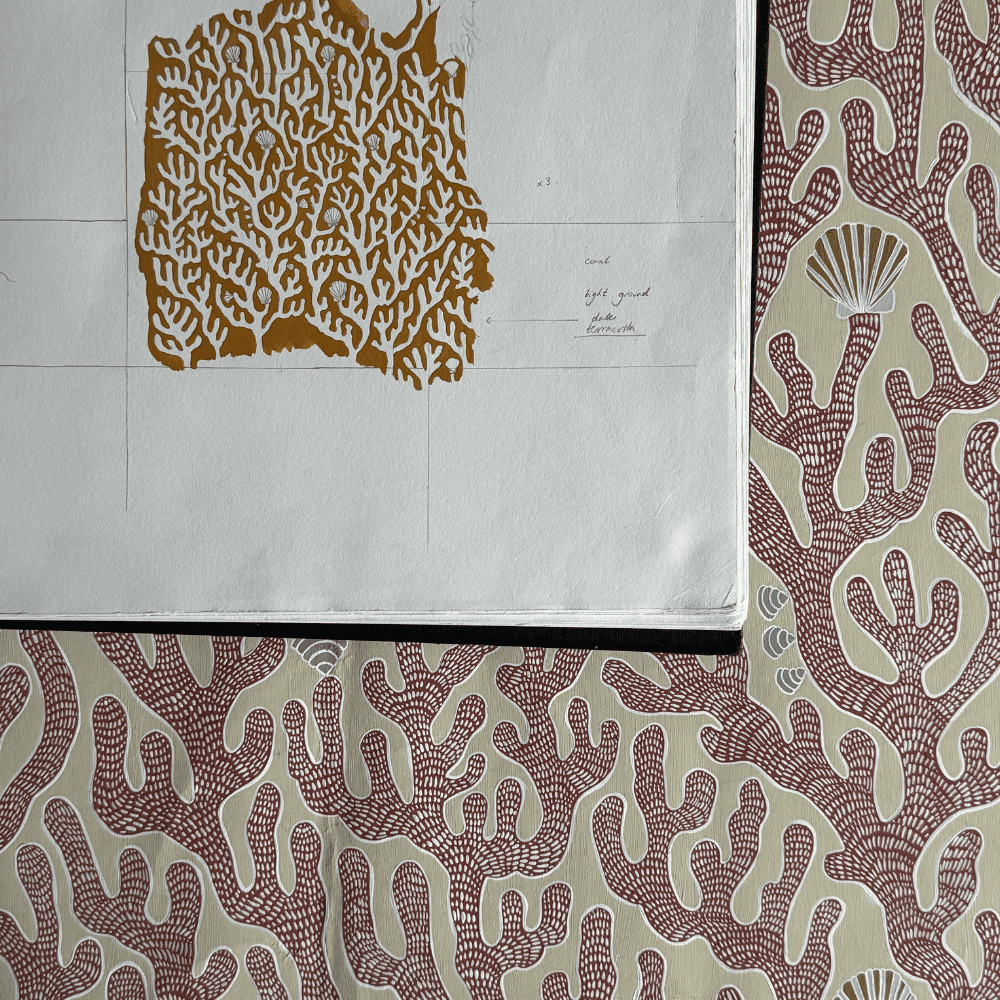
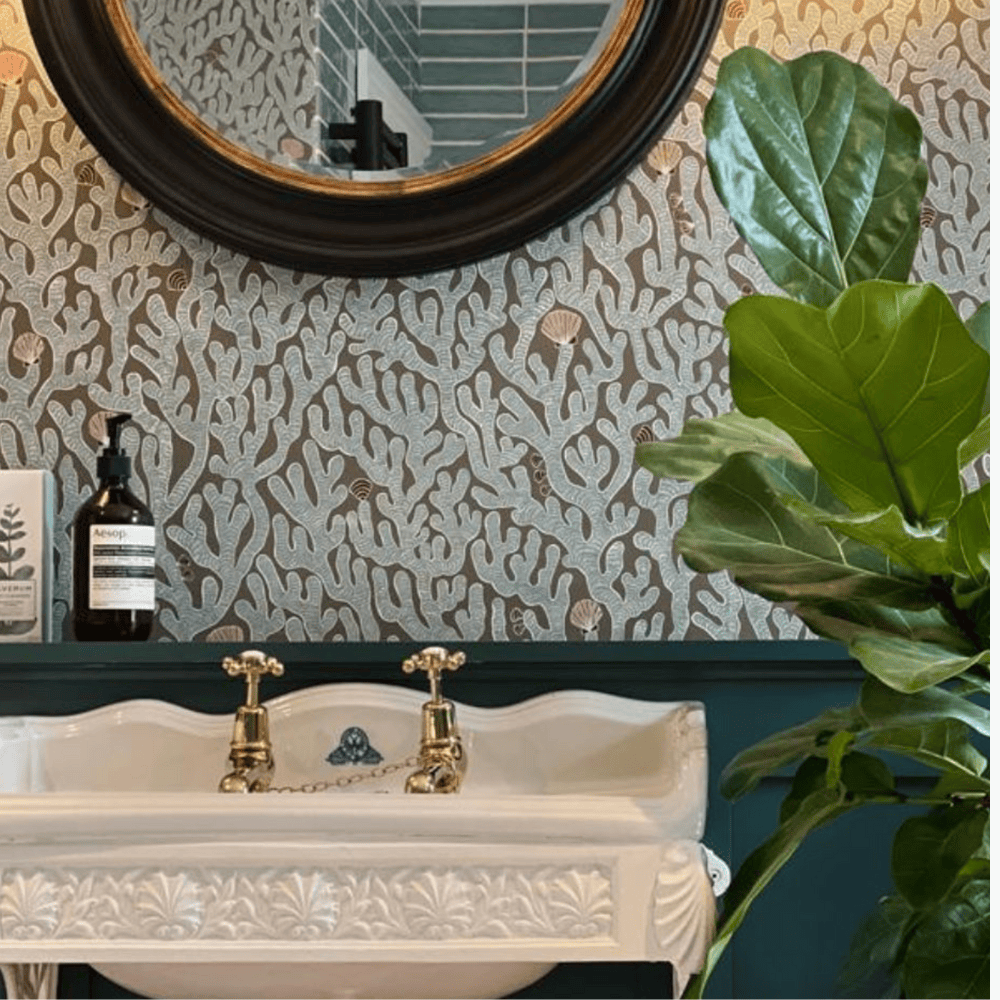
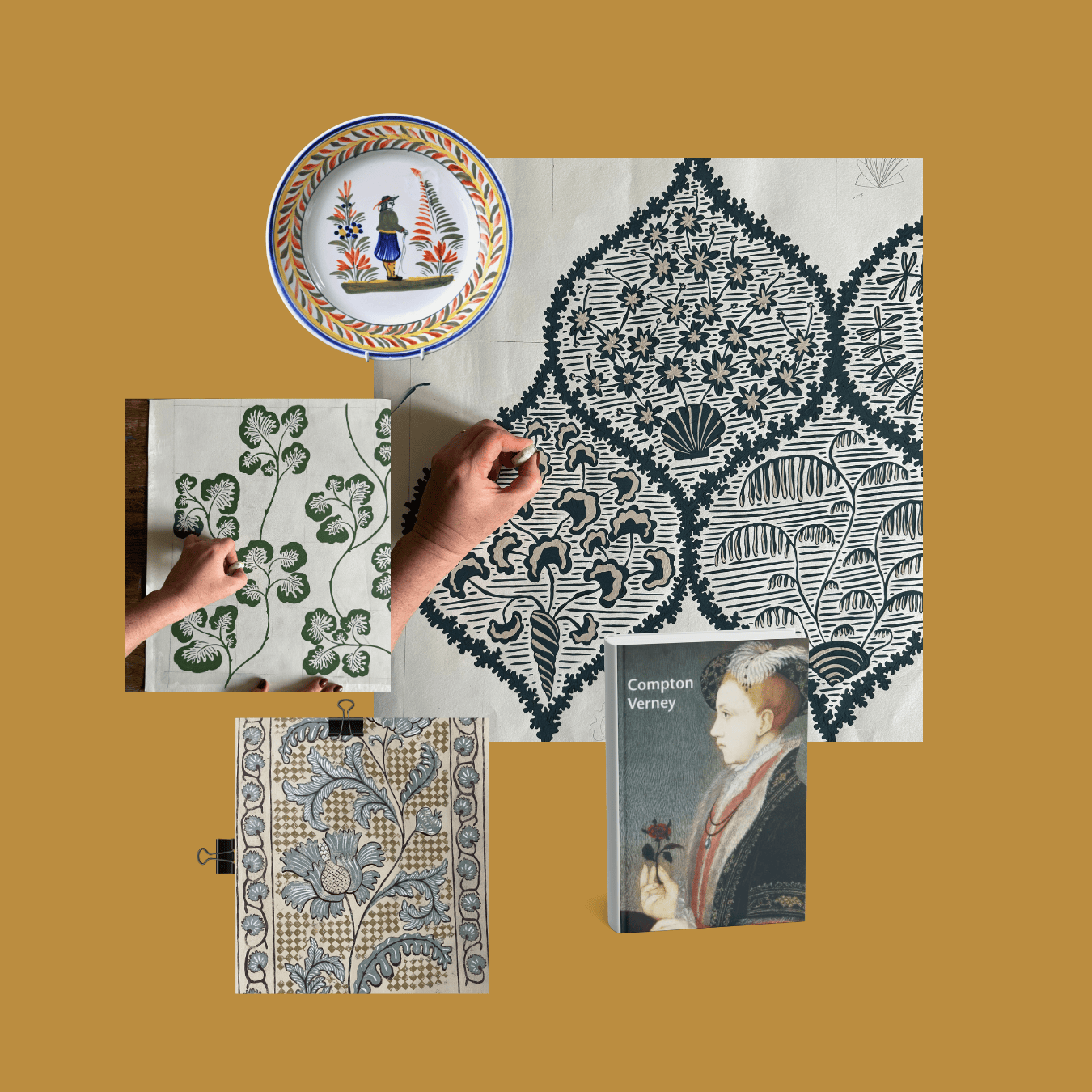
Coral is a hand-painted coral design that balances whimsy with careful observation. Botanical archives, including those of institutions such as the Smithsonian, were used as reference, alongside historic botanical paintings. Texture was created through expressive painted marks to suggest coral surfaces. Shells were painted and positioned in an unusual, playful way. The repeat was carefully painted and adjusted so that no single element dominates, ensuring an even and harmonious surface.
MISERDEN MURAL
Design Story
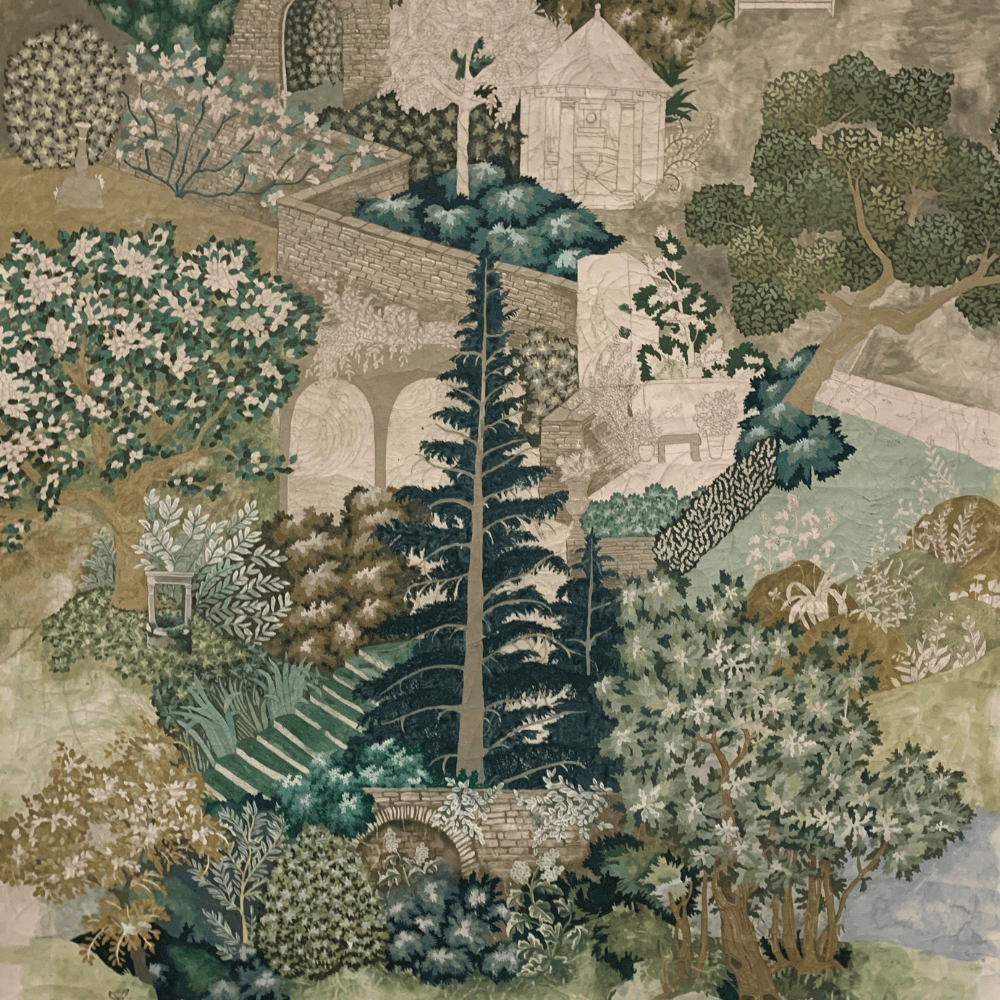
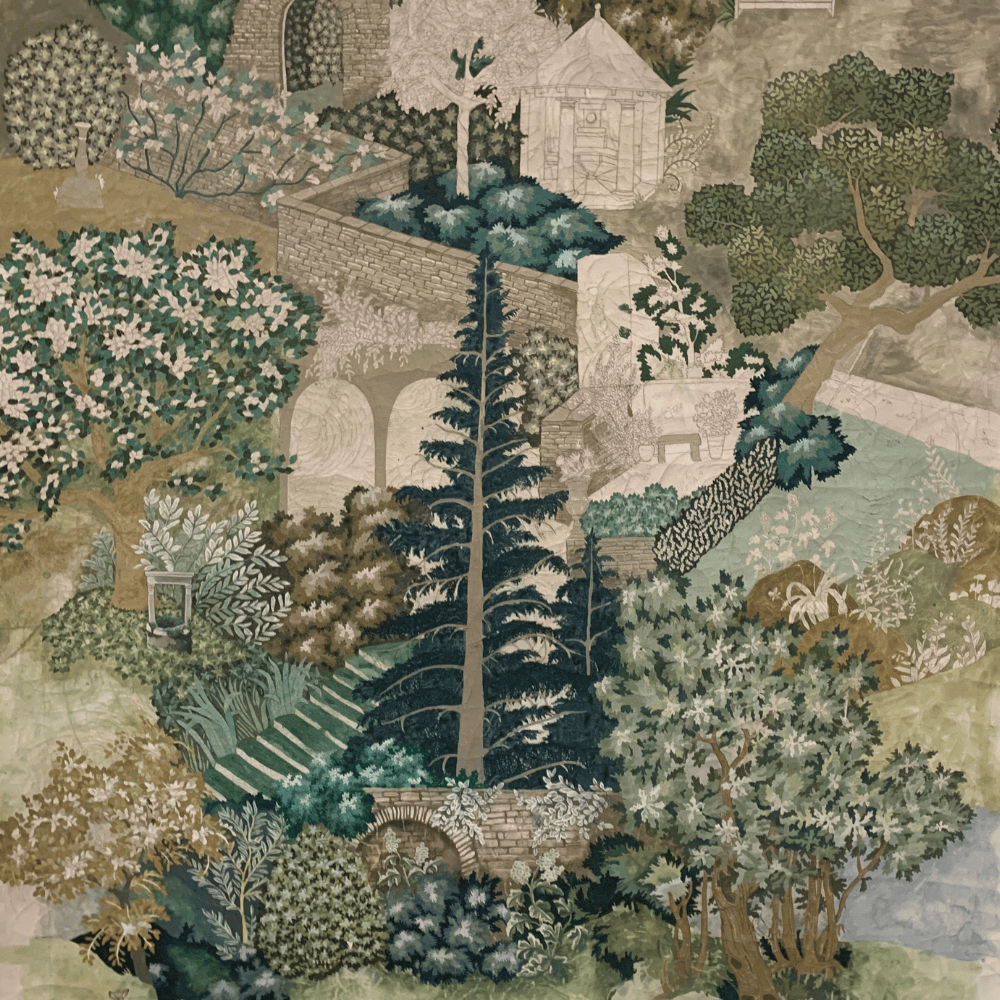
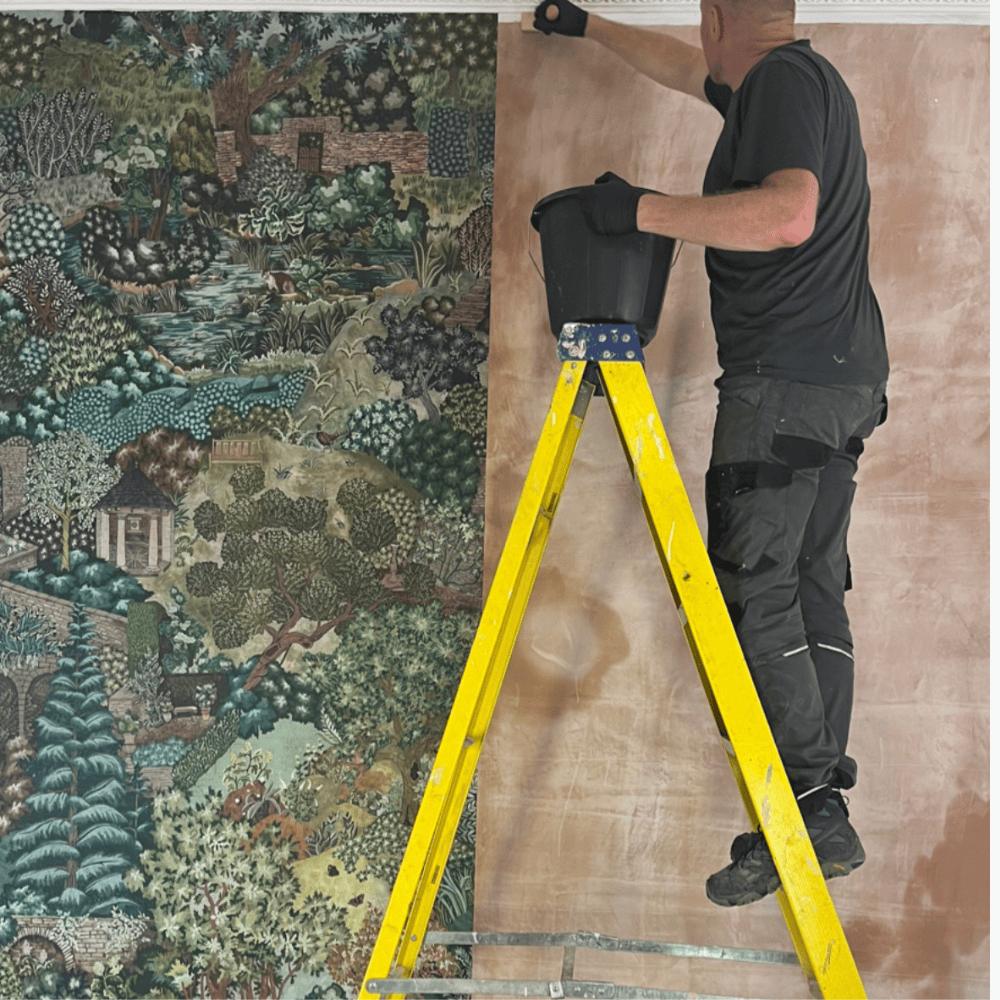
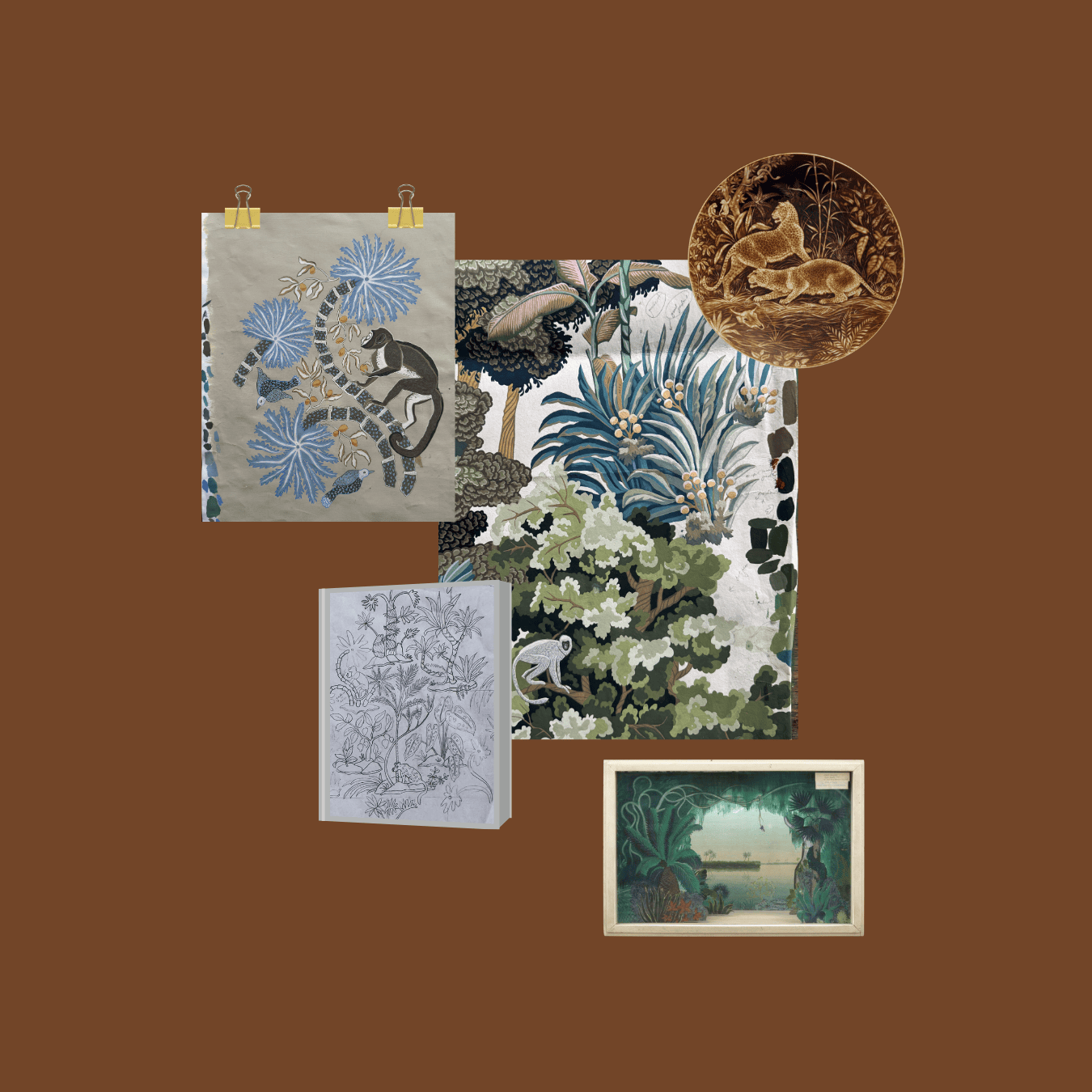
The Miserden Mural was inspired by Miserden Estate in Gloucestershire, a 17th-century walled garden overlooking the Golden Valley. The mural was painted entirely by hand at a large scale over several months. Specific trees, planting, architectural details, insects, and wildlife were taken directly from the grounds, including the historic mulberry tree planted in 1620. Rich layers of paint and texture were built up slowly, combining formal architectural panels with more fluid natural elements.
MISERDEN TREES
Design Story
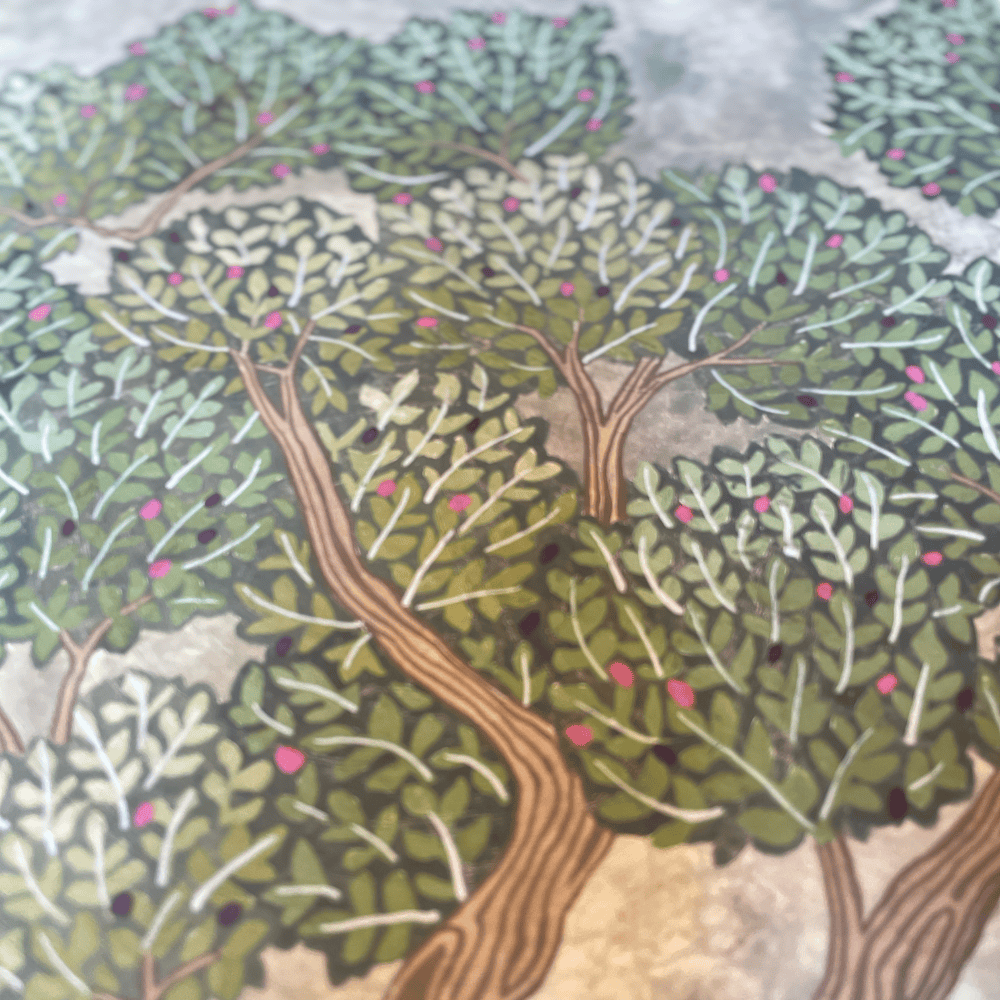
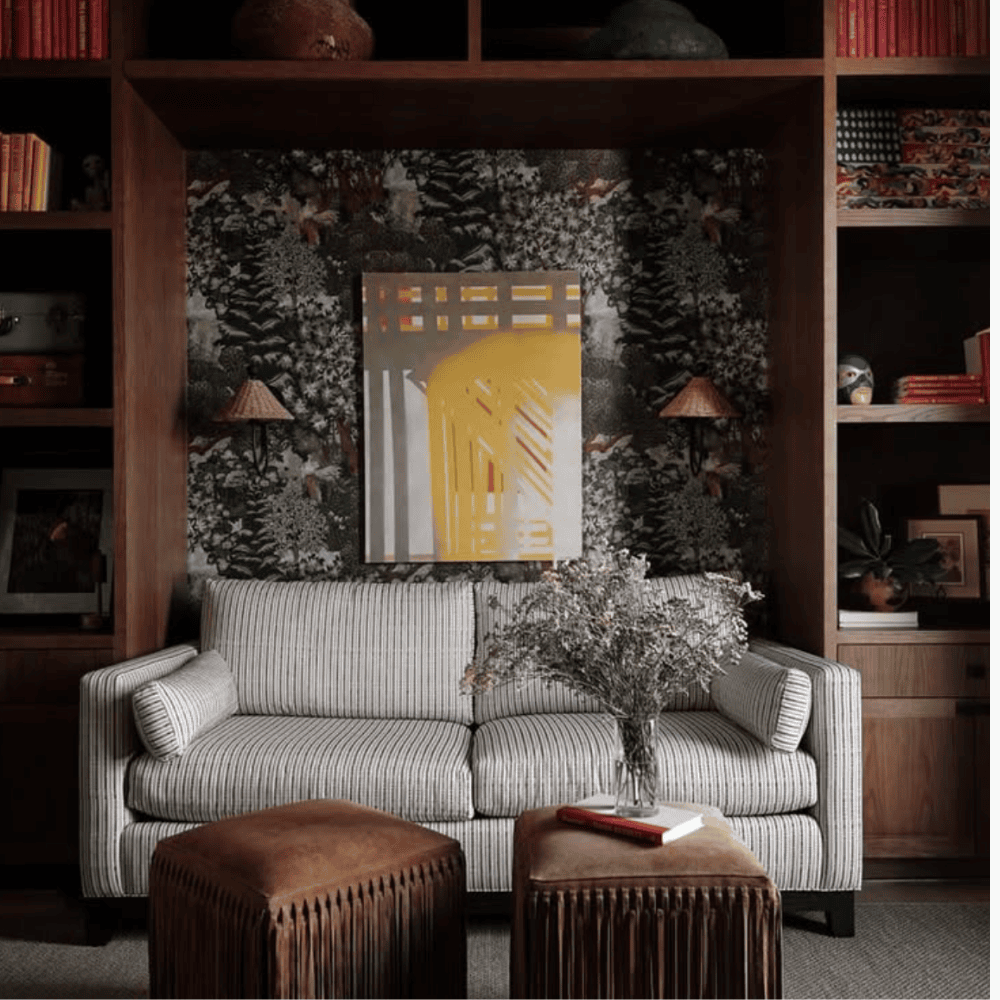
Miserden Trees was developed by carefully extracting hand-painted elements from the Miserden Mural and reworking them into a repeating wallpaper. Mulberry, oak, evergreen trees, and butterflies were repainted and adjusted to suit a repeat format. The design retains the depth and texture of the original mural and can be used either as a coordinating wallpaper or as a standalone design.
Collection Stories
Collection Stories