
BOMBE'S FERNERY
Design Story
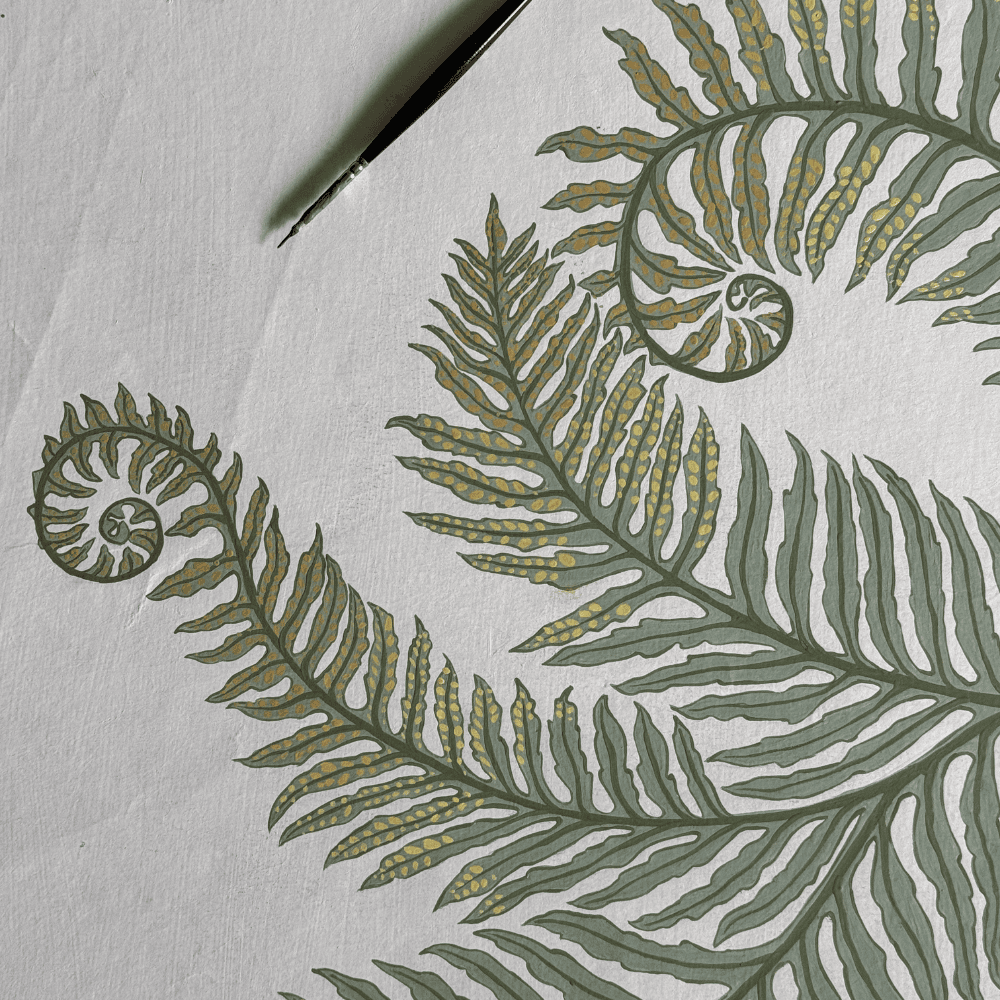
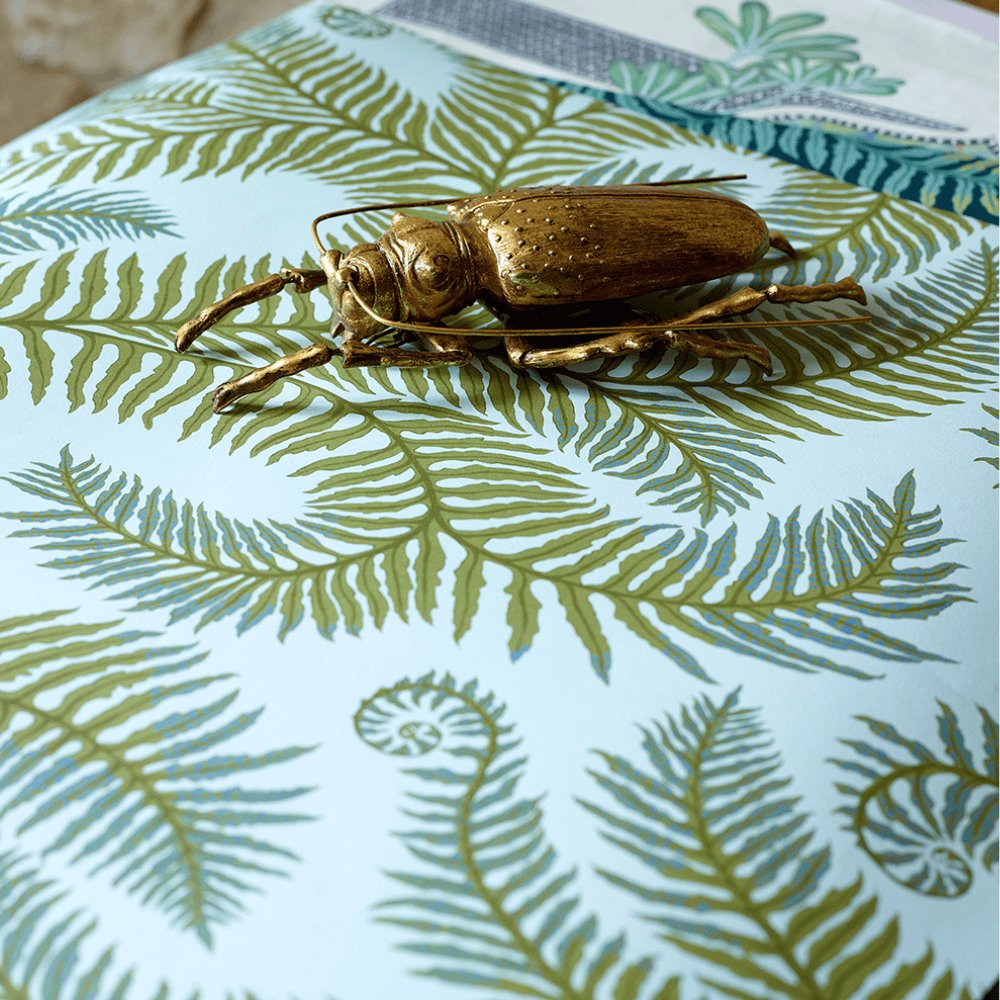
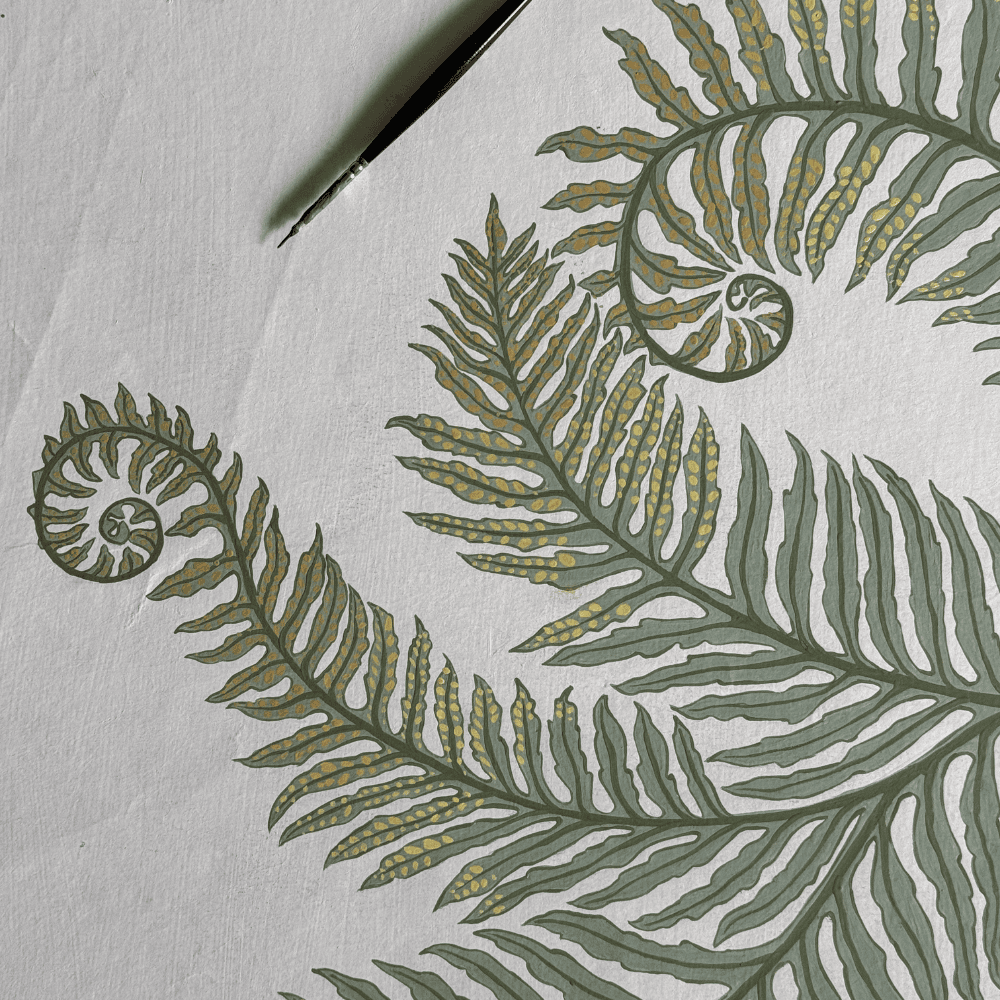
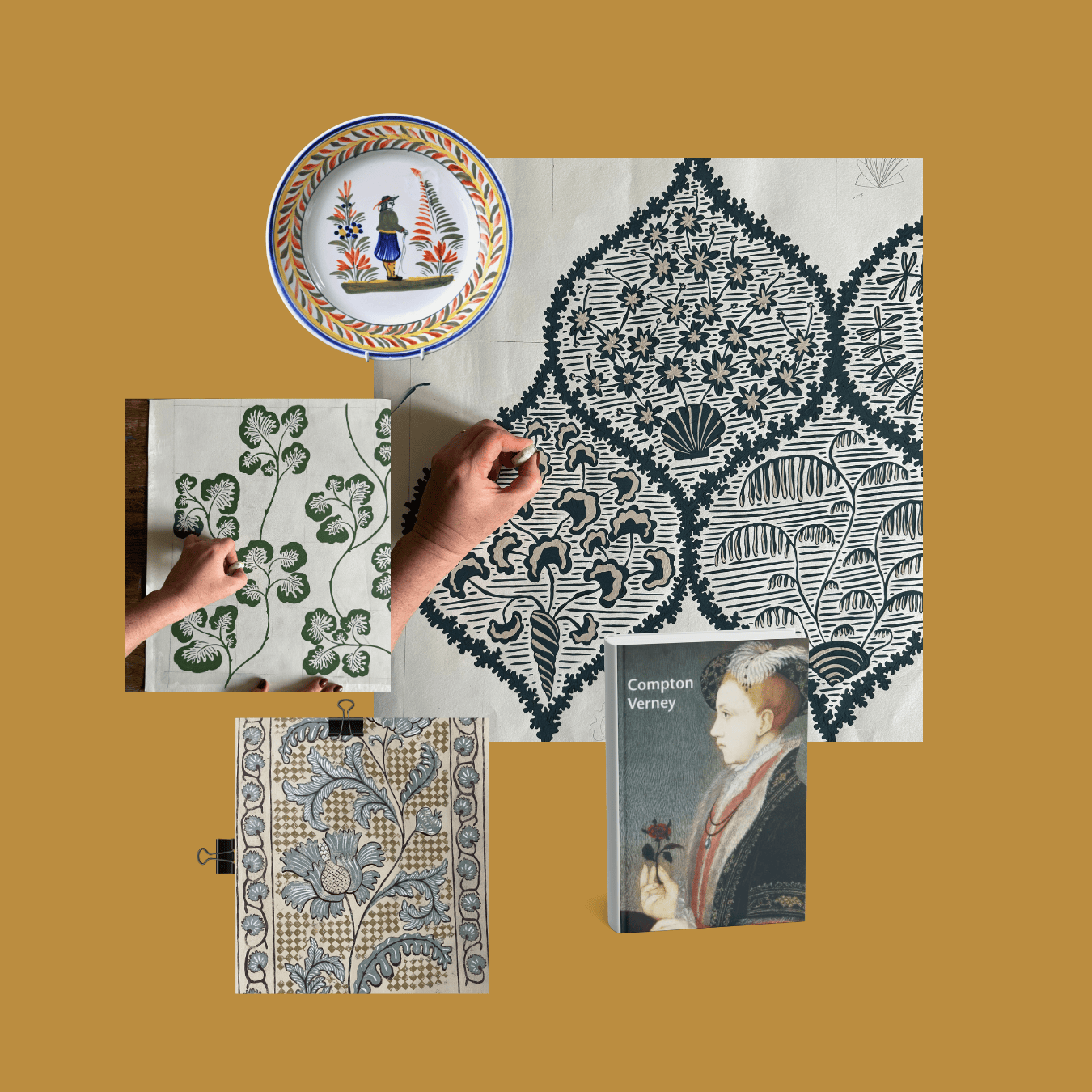
The first design in the collection, Bombe's Fernery, is deeply personal. It was inspired by my mother’s long-standing collection of ferns and by time spent closely observing them in her garden. I am particularly drawn to the seeds on the reverse of fern fronds; when studied carefully, they reveal an unexpected geometry.
That structural quality became the foundation of the design, alongside the opportunity for a surprising pop of colour. I repeatedly sketched the layout, testing how two stems would intersect and resolve across a wall, before committing to painting the motif at scale. The final artwork was carefully painted by hand, with close attention to line weight, spacing, and rhythm, ensuring the repeat would remain calm and balanced when used across large surfaces.
LIVING BRANCHES
Design Story
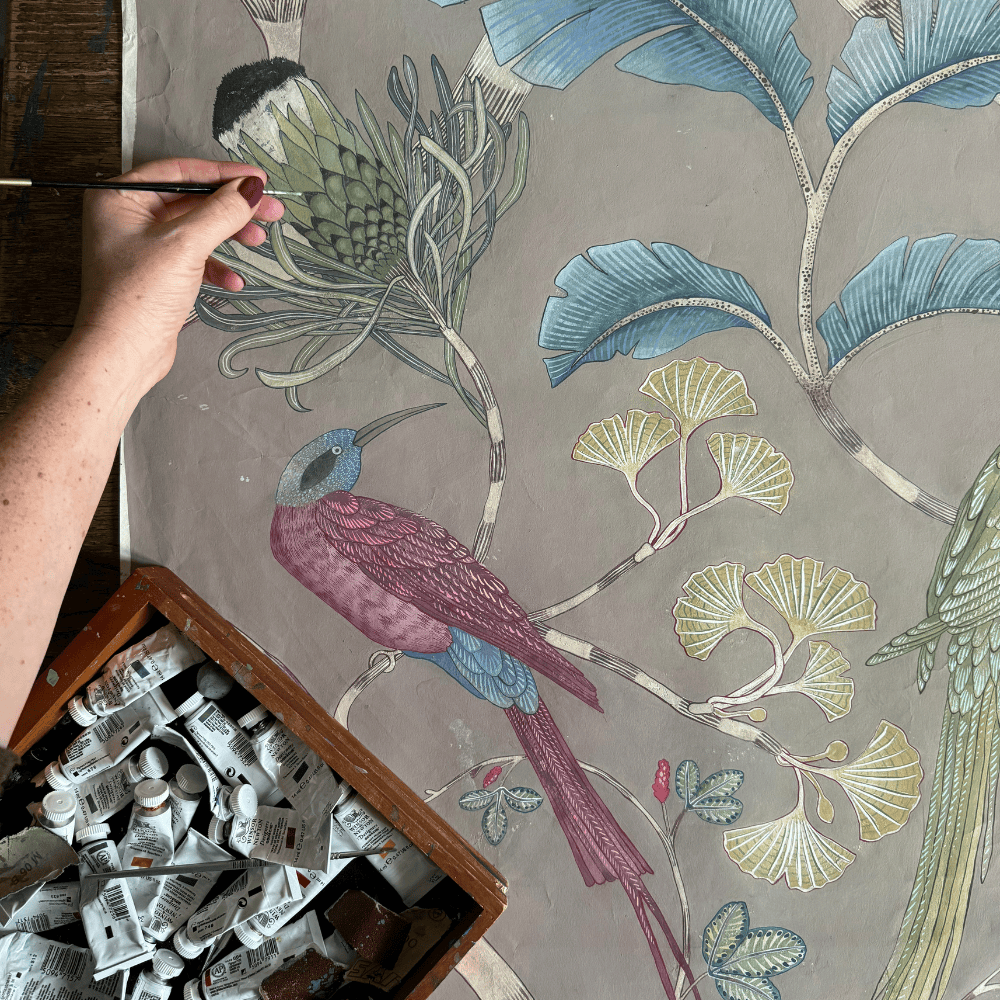
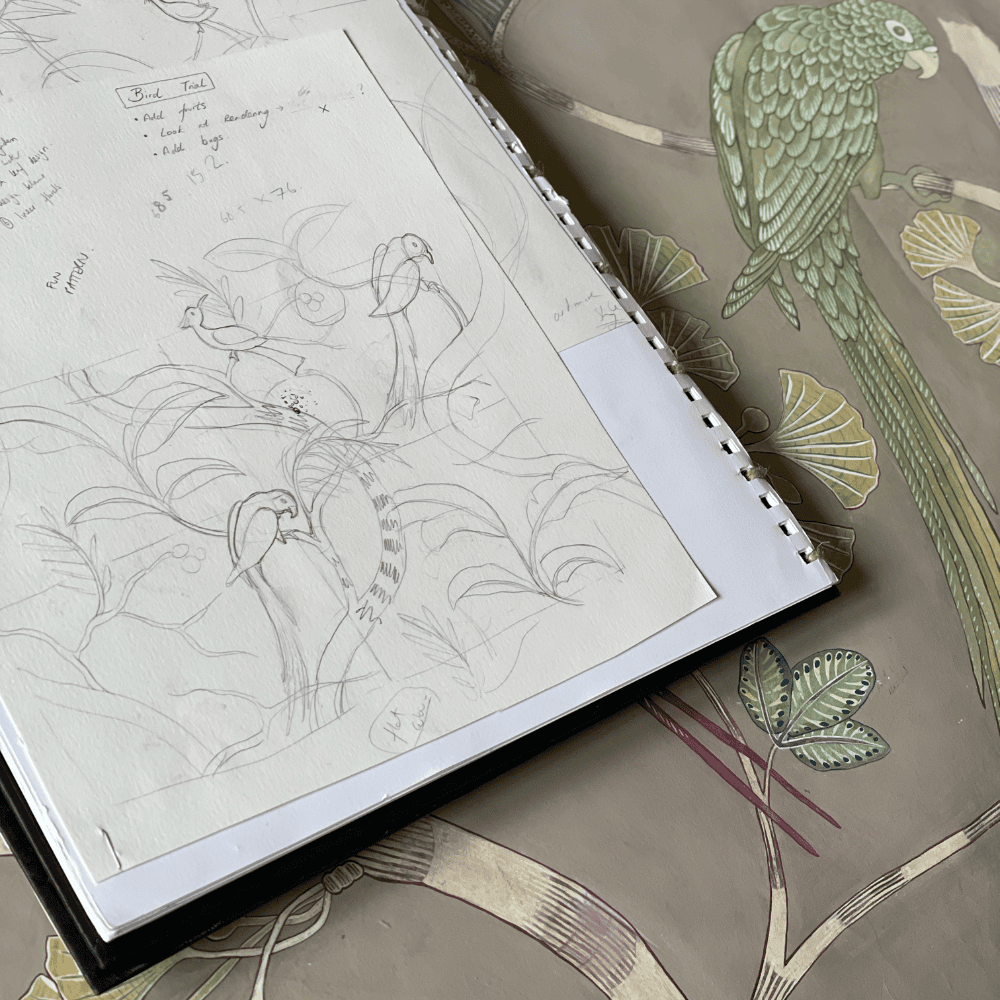
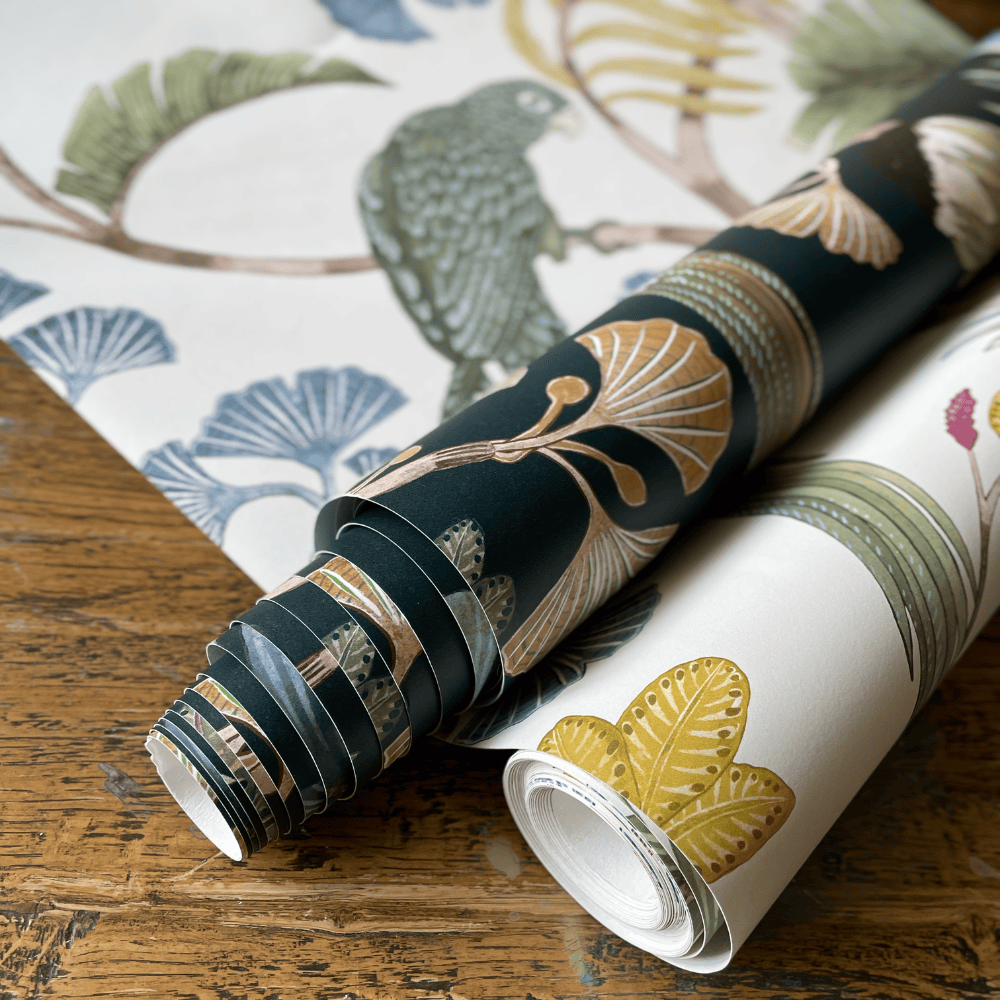
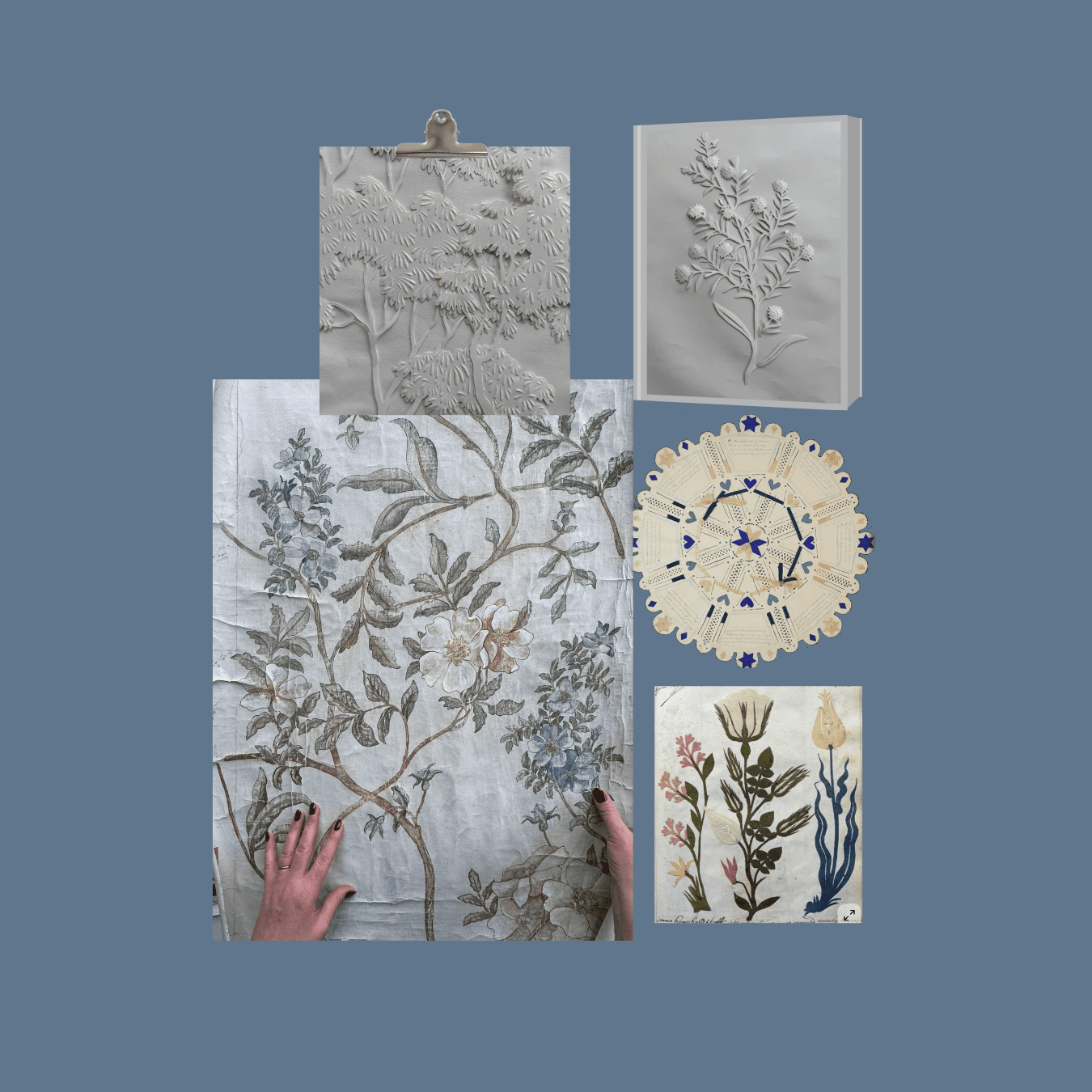
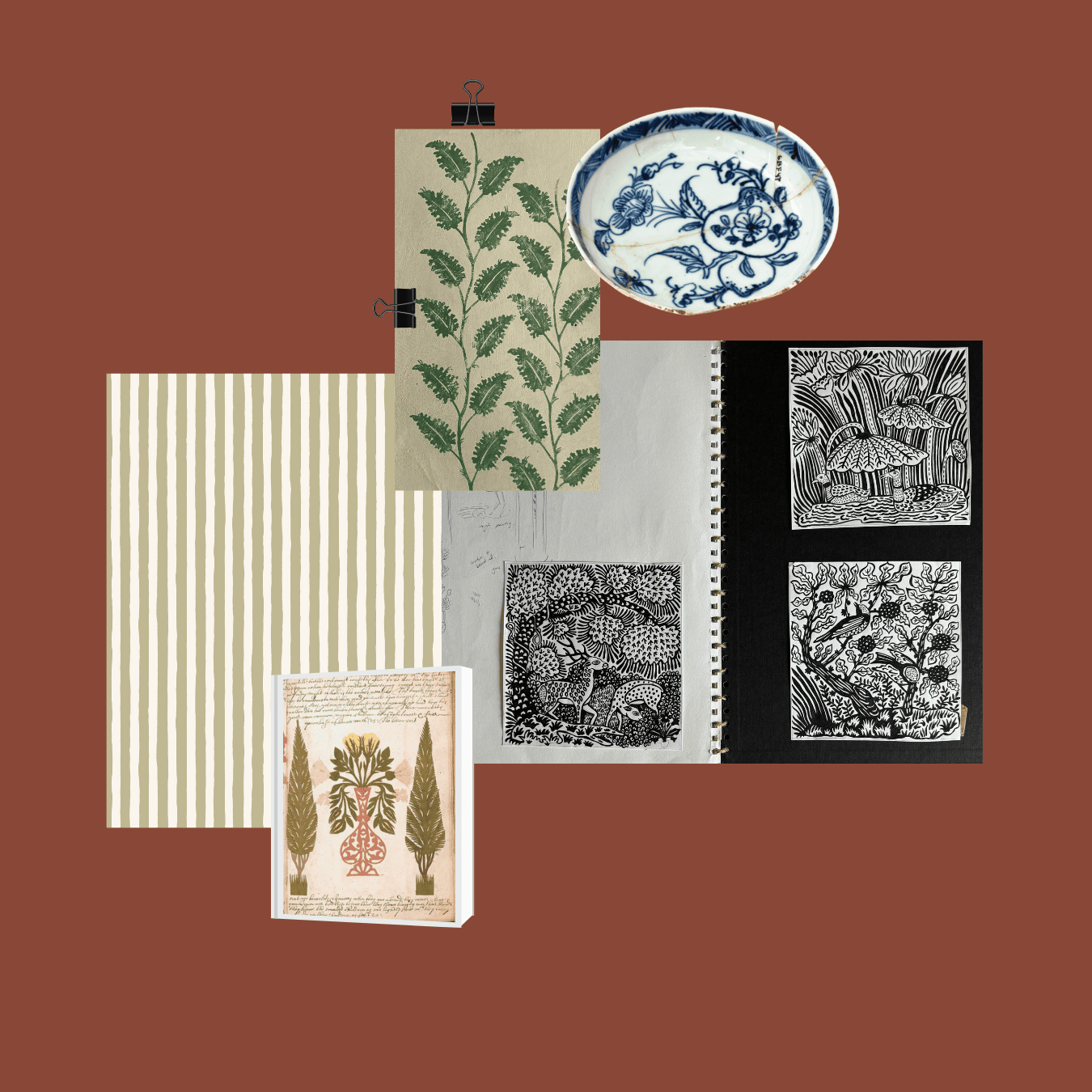
Living Branches takes its cue from ginkgo leaves and historic artworks held in the V&A Museum. The branching structure tessellates upwards, forming a living framework for birds resting within the design. Texture plays a central role here, influenced by the work of artist Robert Zakanitch. The surface was built up slowly through layers of hand painting, allowing brush marks and subtle irregularities to remain visible. The design began as a series of exploratory sketches before the final layout was resolved and painted as a large-scale artwork. Background colours were not quite right so I changed them, resulting in a range of considered colourways that enhance the depth of the painted surface.
BROCCOLI CANOPY
Design Story
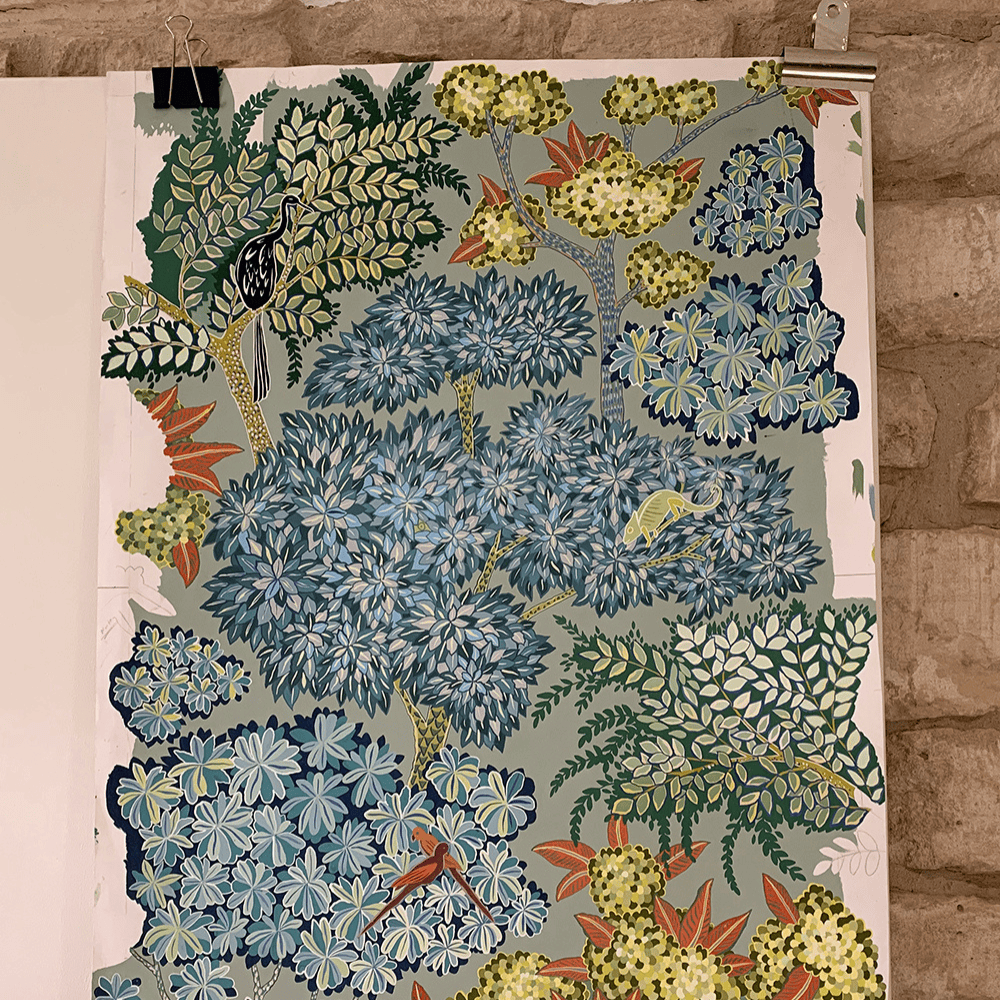
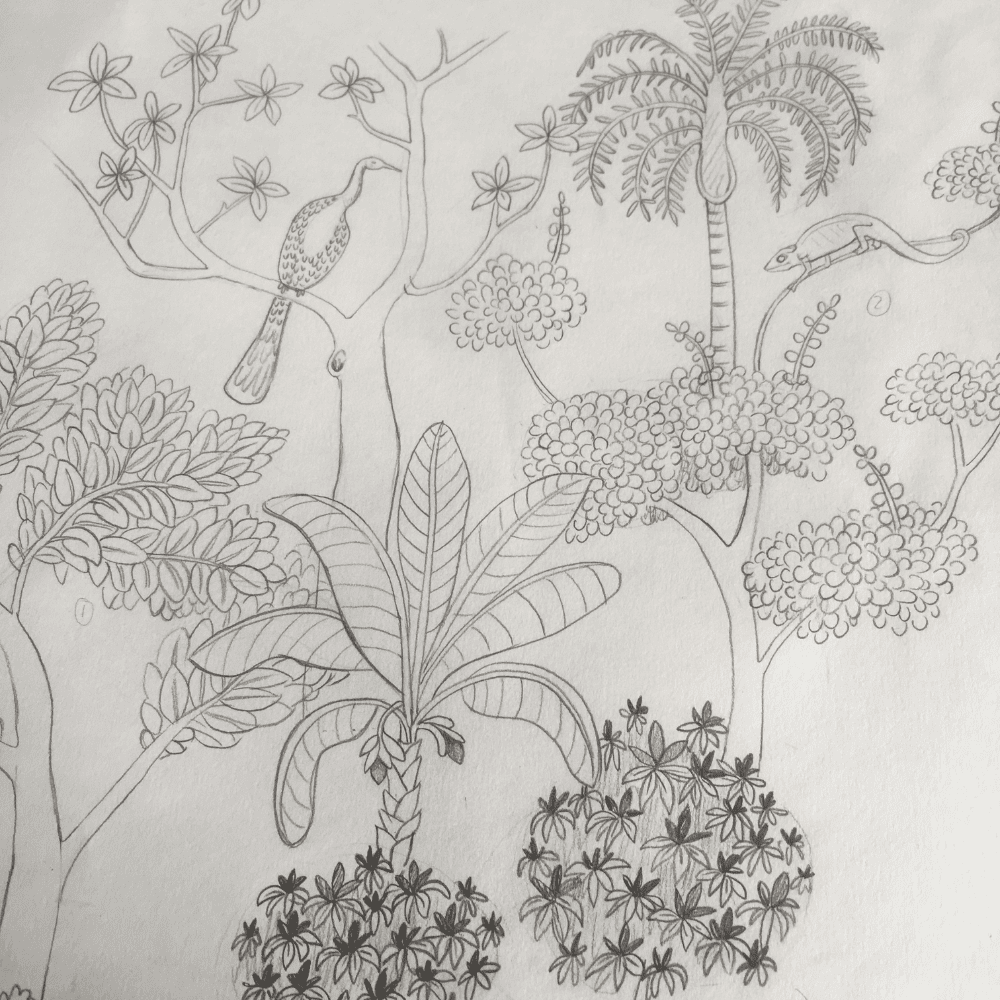
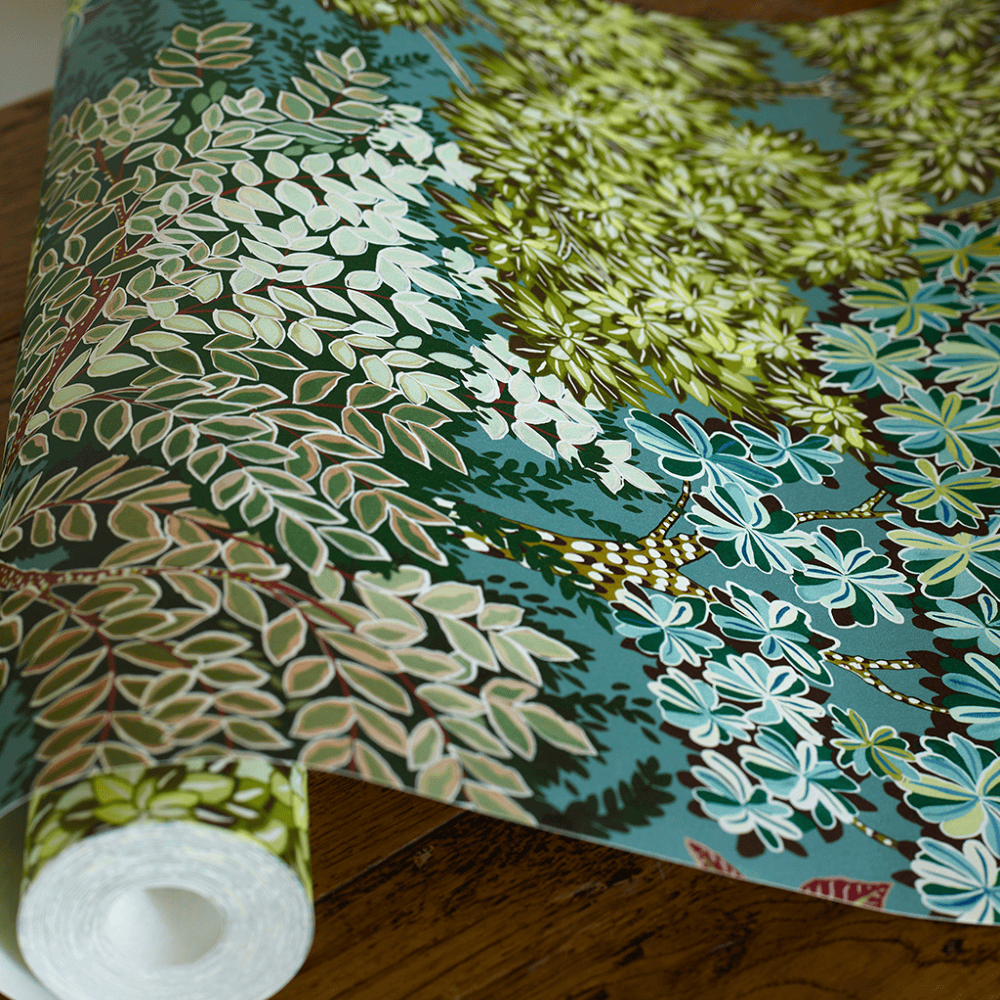
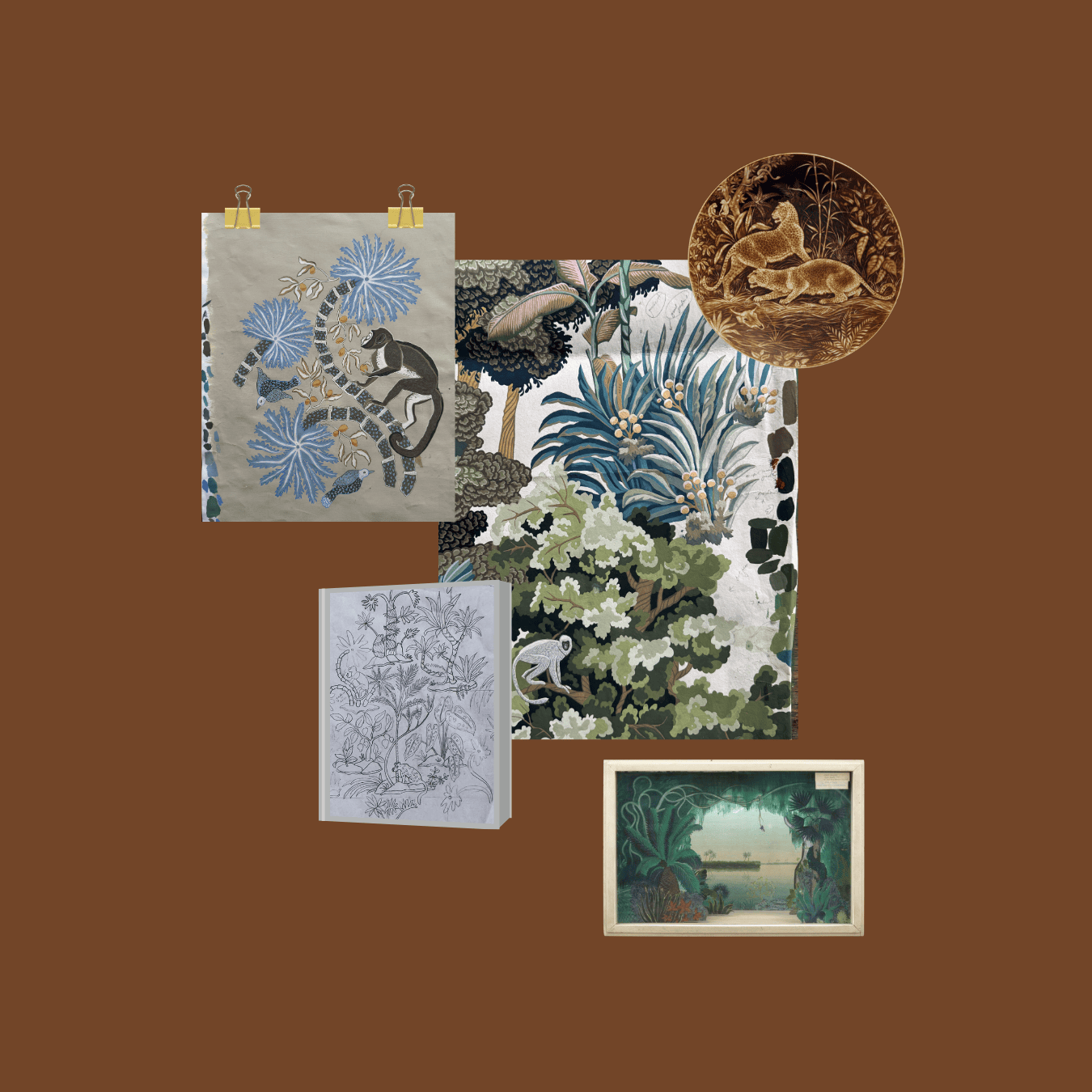
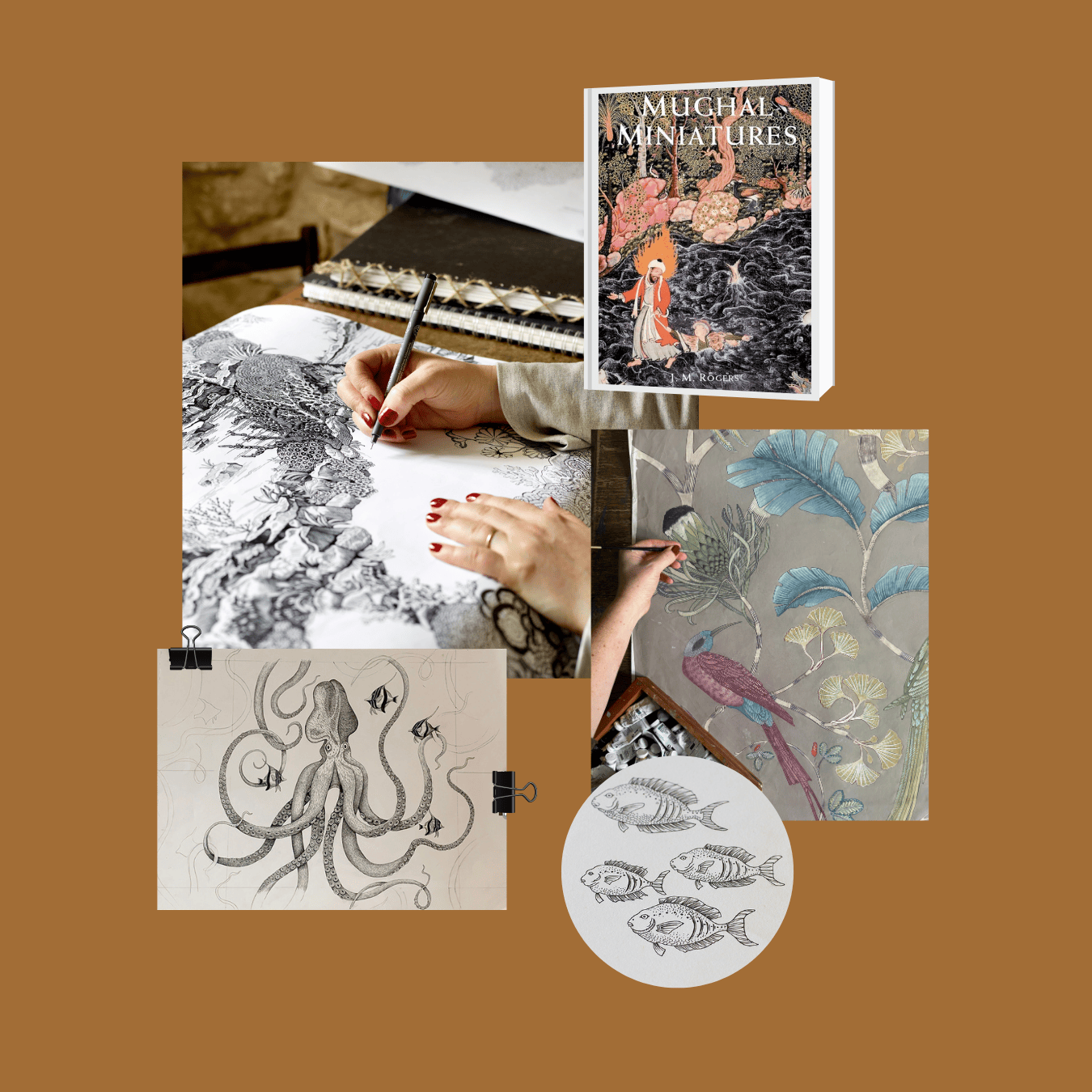
Broccoli Canopy was one of the earliest and most labour-intensive designs in the collection. Its foliage is drawn directly from Mughal miniatures studied at the V&A and reinterpreted at a larger, more immersive scale. The aim was to create a dense overhead canopy that feels abundant yet controlled, echoing the stylised naturalism of historic miniature painting. The layout evolved through many stages until the rhythm felt right. Each individual leaf was painted separately, with careful attention paid to tone and shape, making this a slow and methodical process. Once complete, the artwork was scanned and recoloured digitally, but the original painted palette proved the strongest and remains unchanged.
WOODLAND FLOOR
Design Story
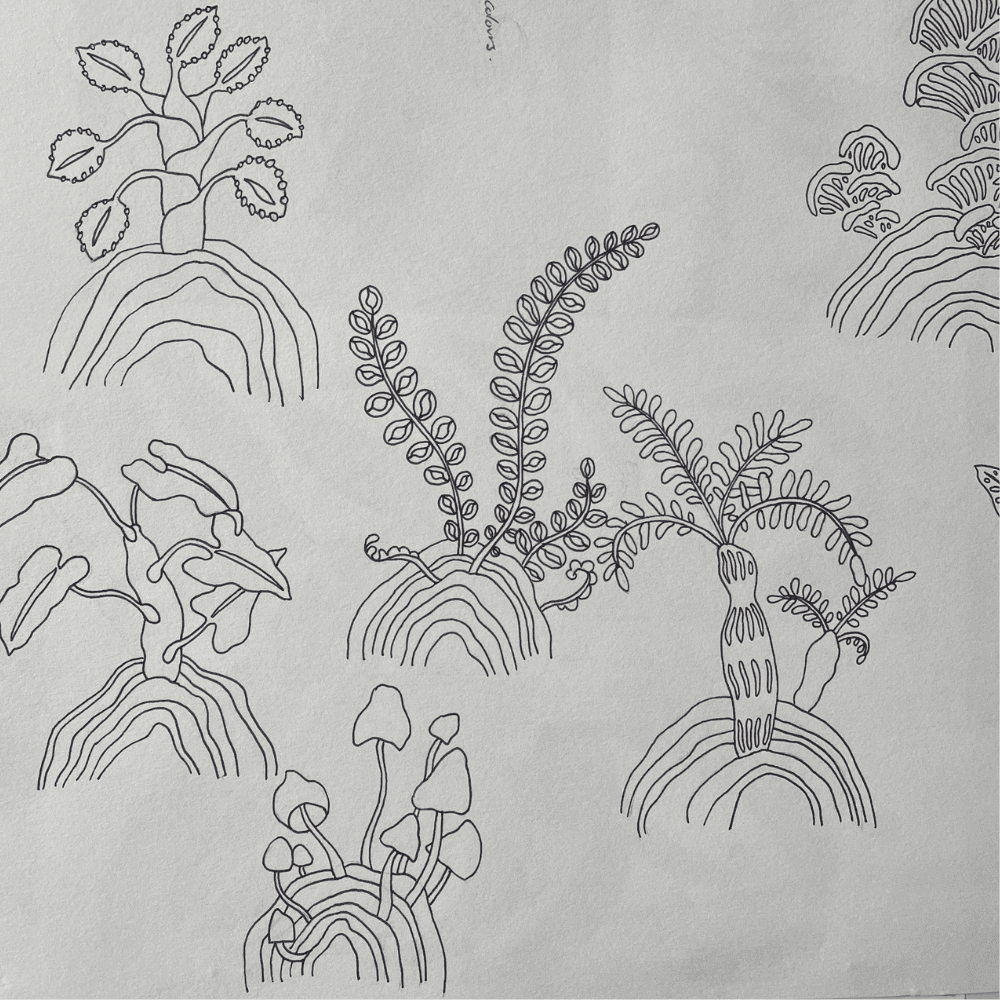
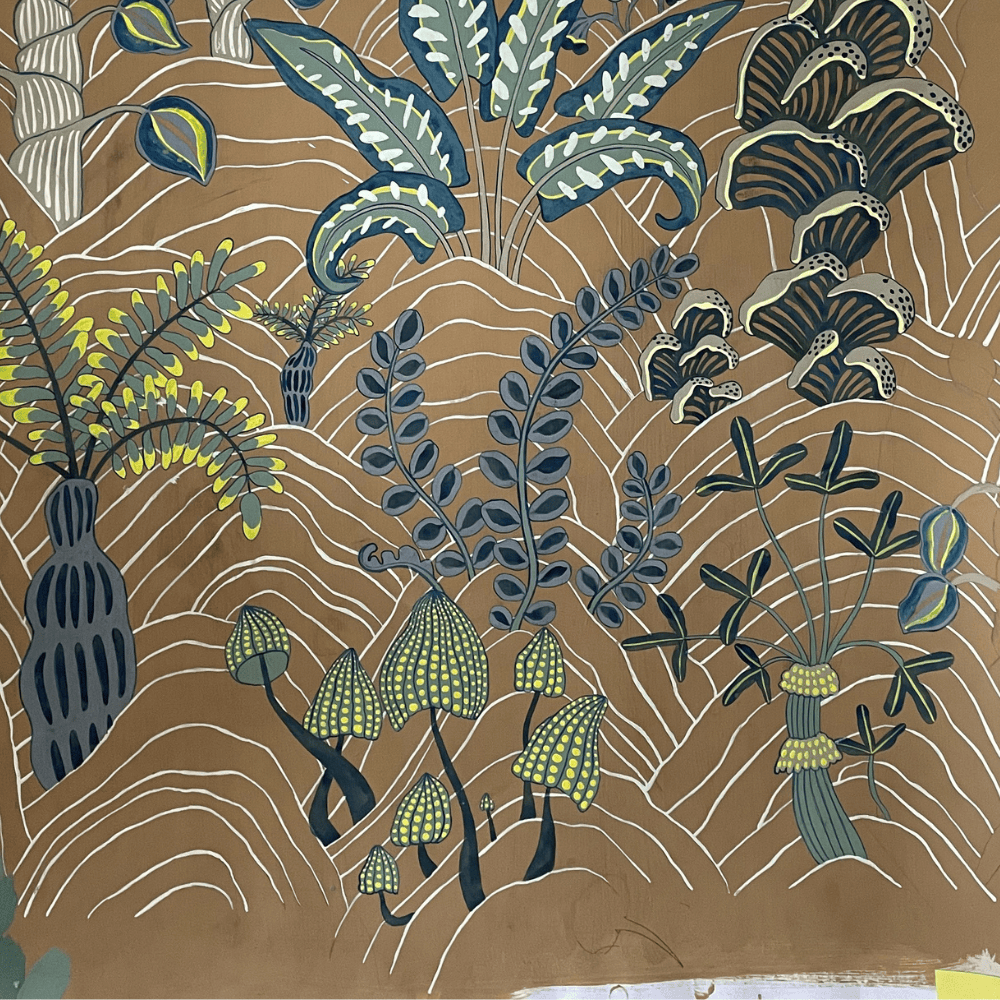
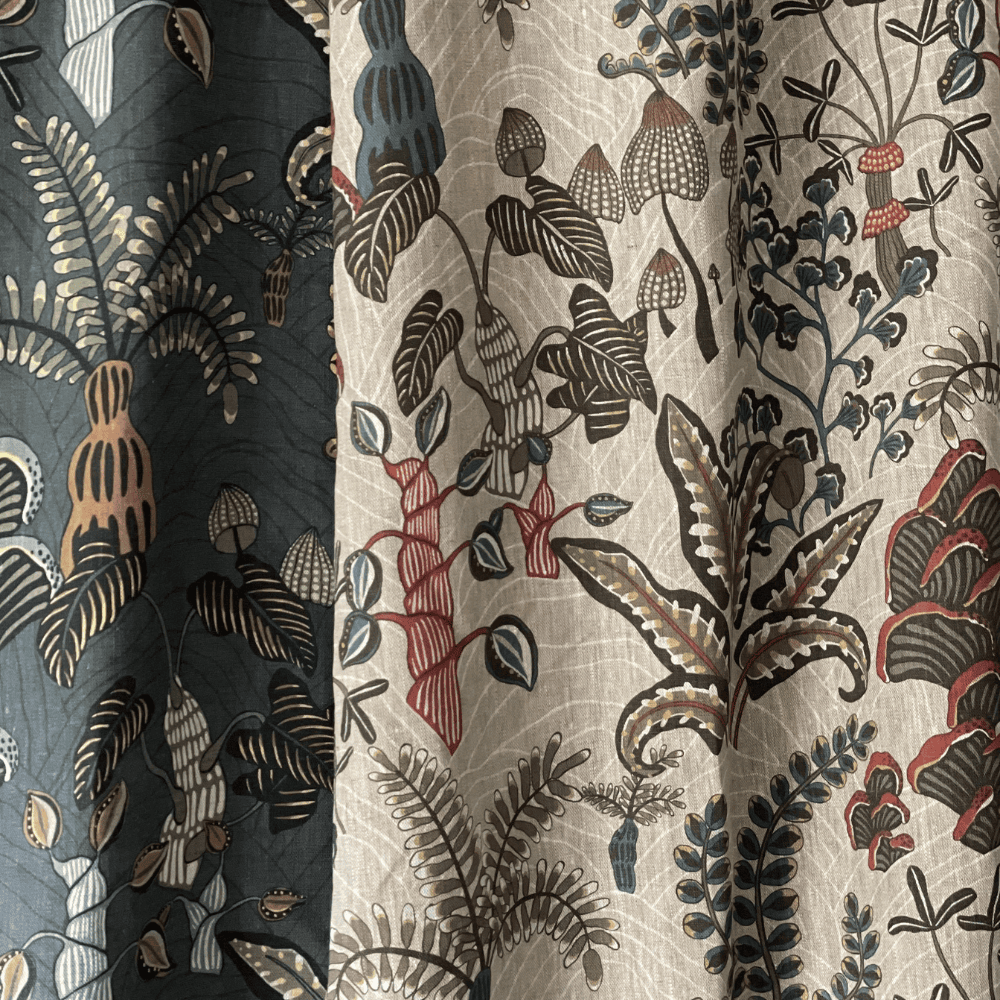
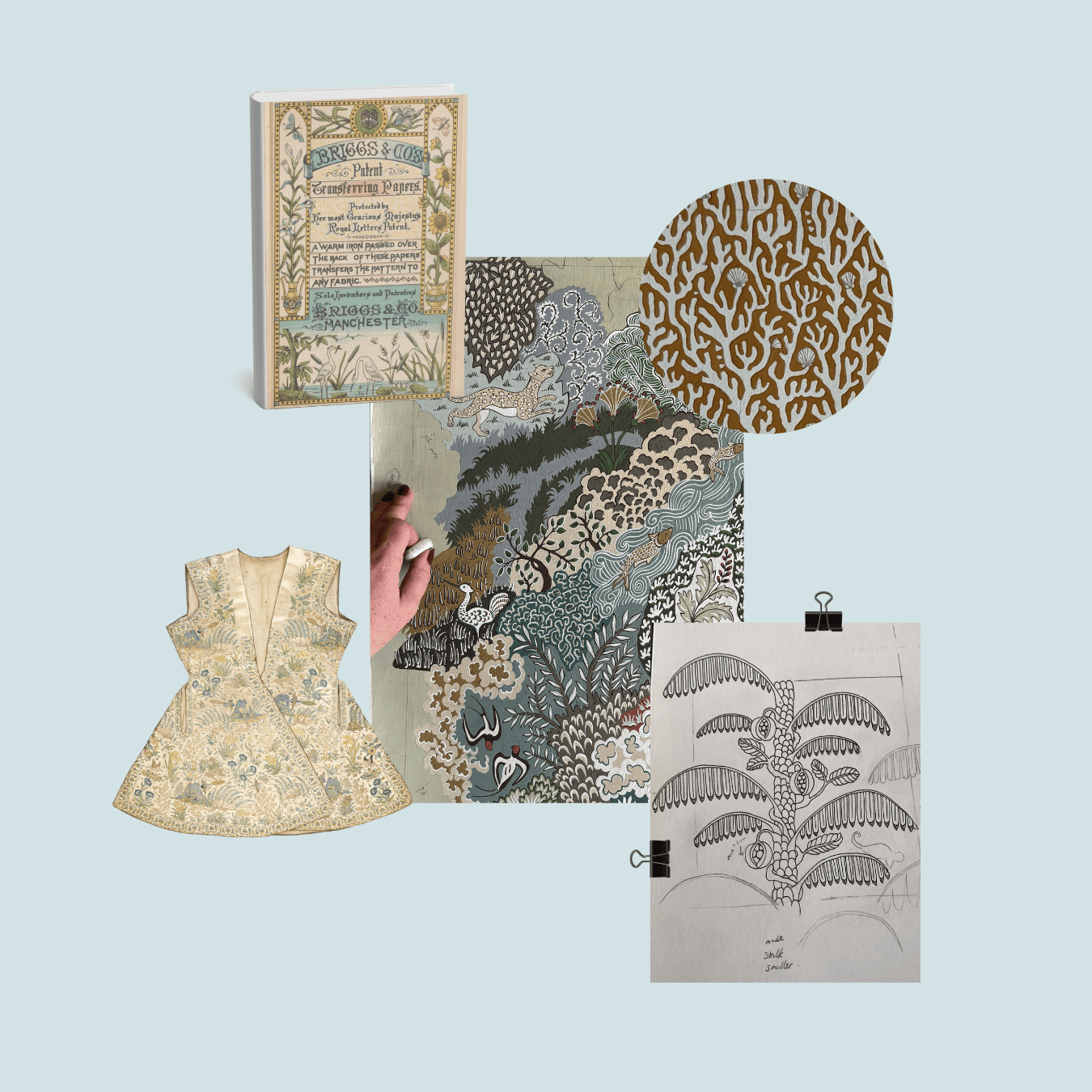
With Woodland Floor, inspiration came closer to home. Walks near our house informed the subject matter: fungi, ferns, moss, and soil forming soft, layered mounds across the forest floor. The design also references the narrative quality of old tapestries, where scenes unfold gradually through detail. Botanical references from the Smithsonian archives supported accuracy, while everything was hand painted to preserve warmth and irregularity. Individual mounds were sketched and painted separately before being layered into a cohesive repeat. The design was repainted digitally to explore both lighter and darker colourways, and it is also available as fabric, where the painted texture translates beautifully into curtains.
UNDERWATER JUNGLE
Design Story
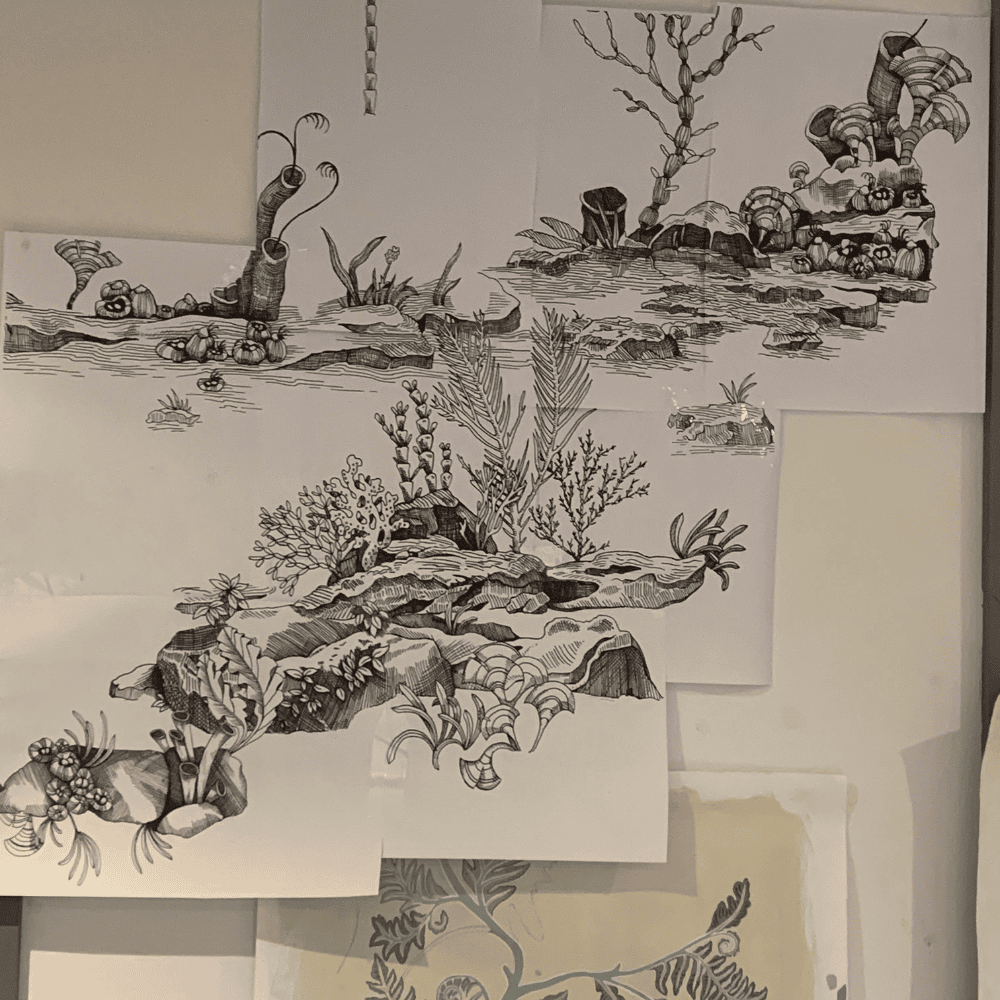
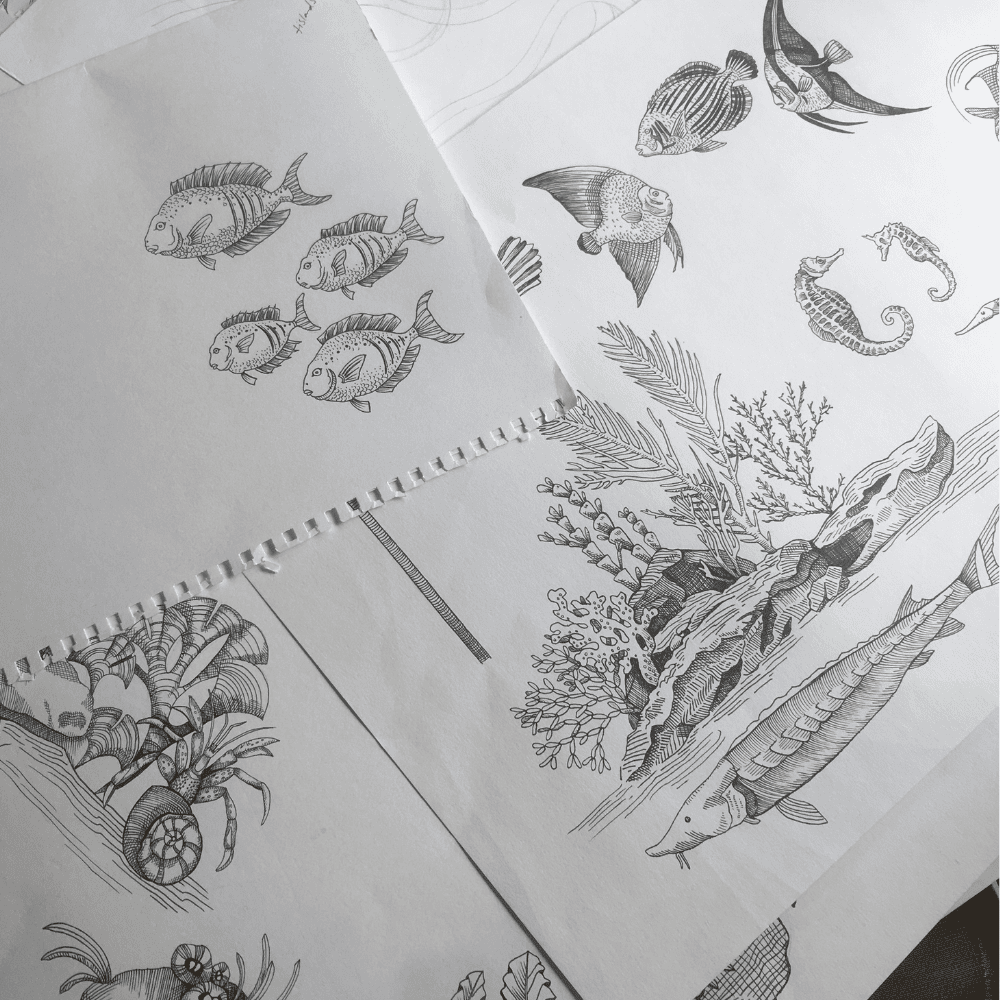
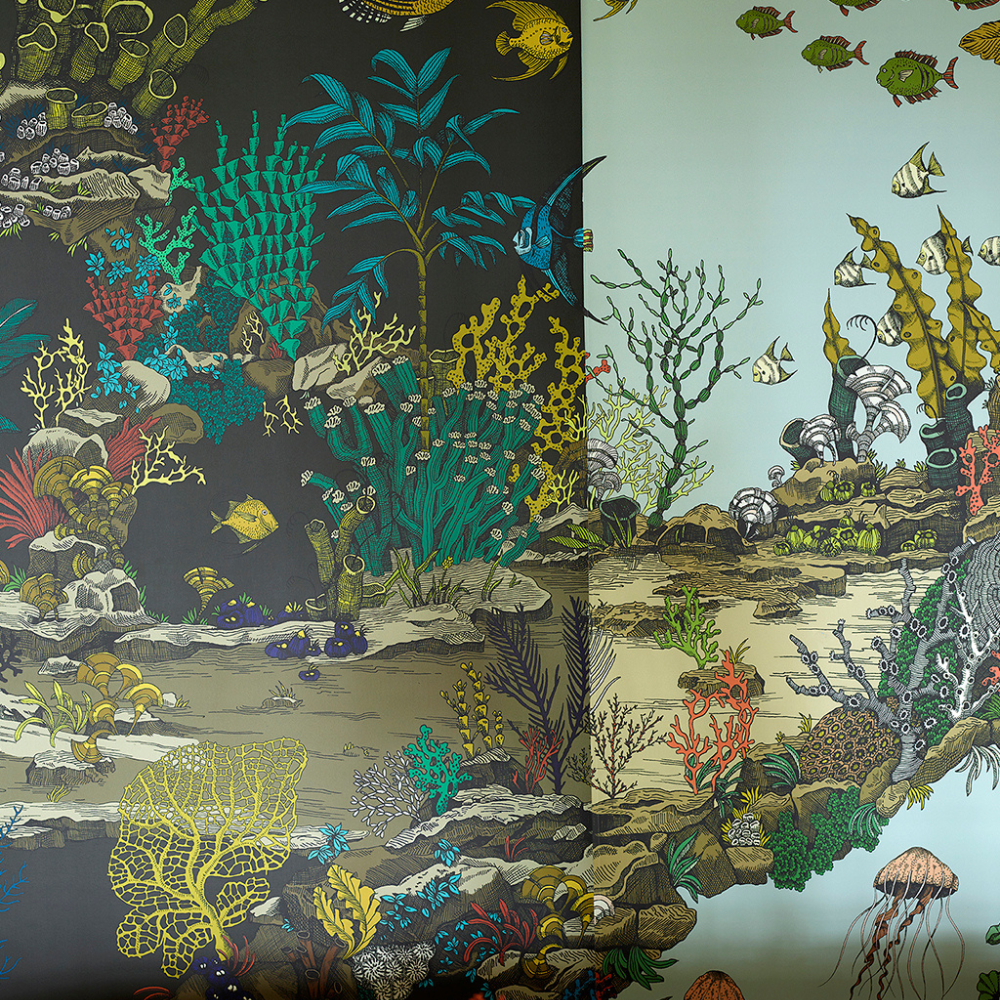
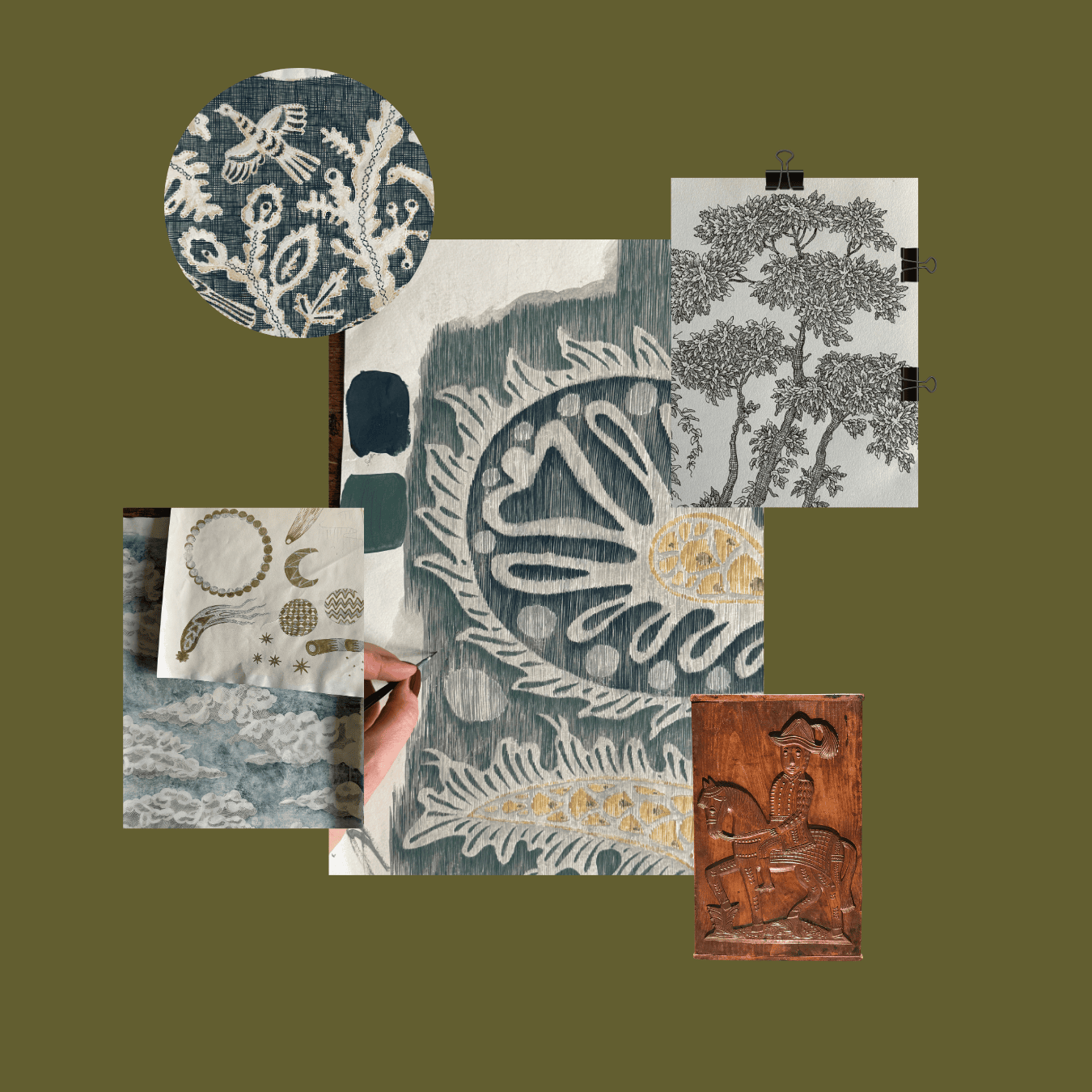
Underwater Jungle is a more whimsical design, inspired by the shell drawings of John Bartsch, an 18th-century naturalist and illustrator whose meticulous studies bridged science and art. His work captures marine life with both precision and wonder, qualities I wanted to echo here. Additional influence came from the dreamlike paintings of Harrison Howard. Corals and tree-like forms merge beneath the surface, creating an imagined underwater landscape. Historic toile designs informed the use of cross-hatching, which was drawn by hand in pencil and ink. The artwork was then scaled up to introduce drama and presence on the wall. Colour was applied digitally, allowing for freer experimentation and multiple colourways. The design also works as a panel, fading gently into open water at the top.
PEACOCK ARCHES
Design Story
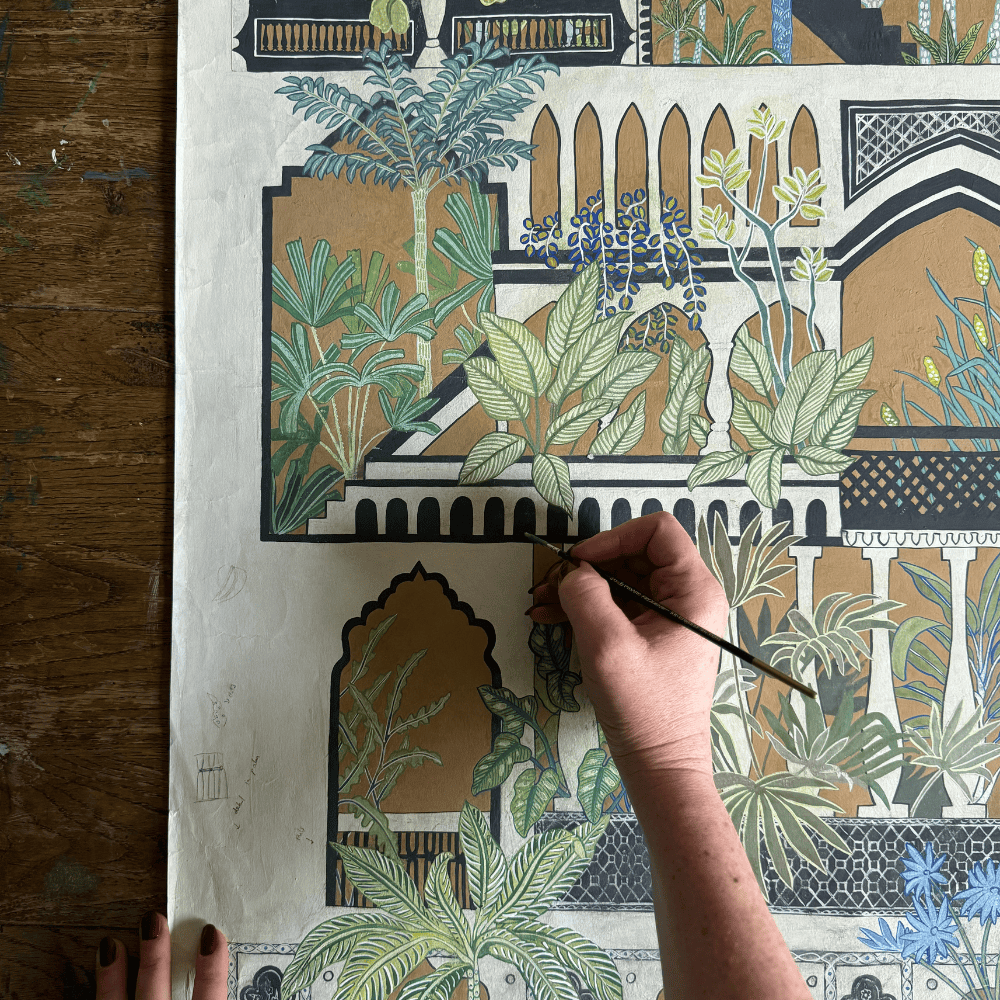
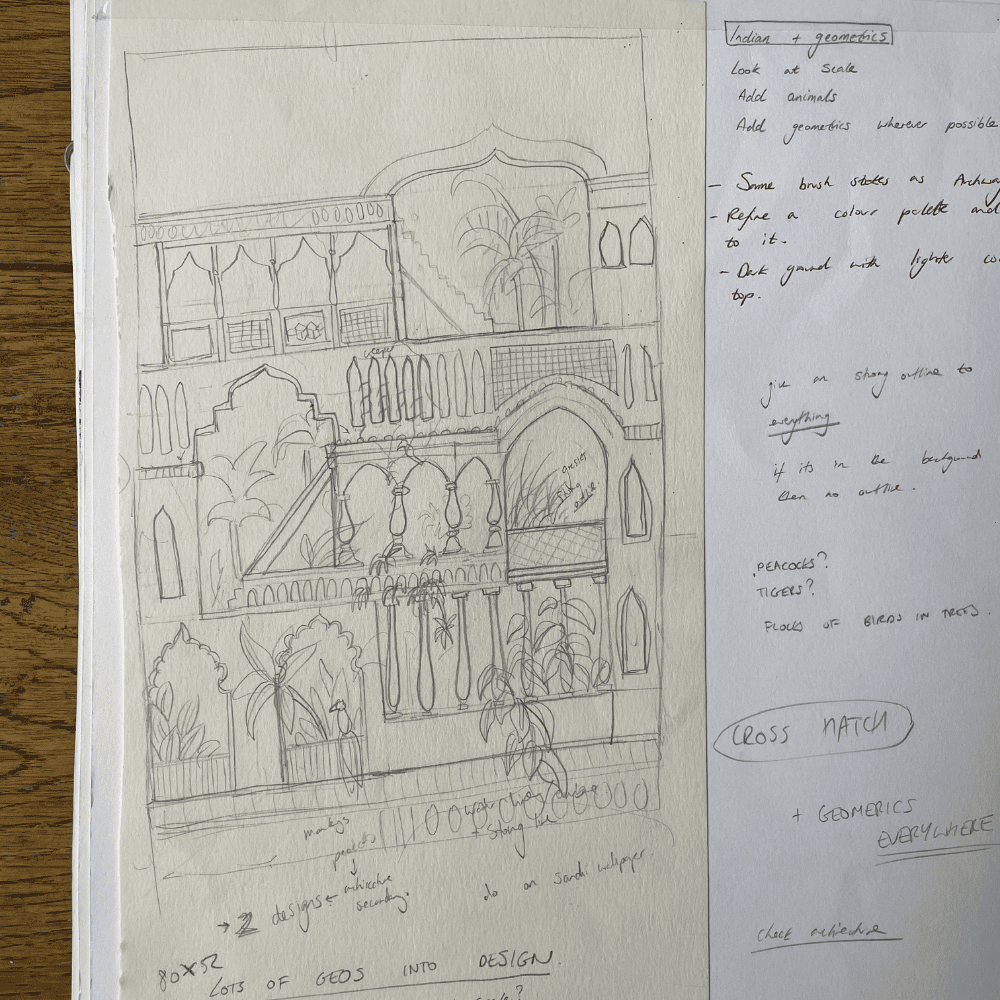
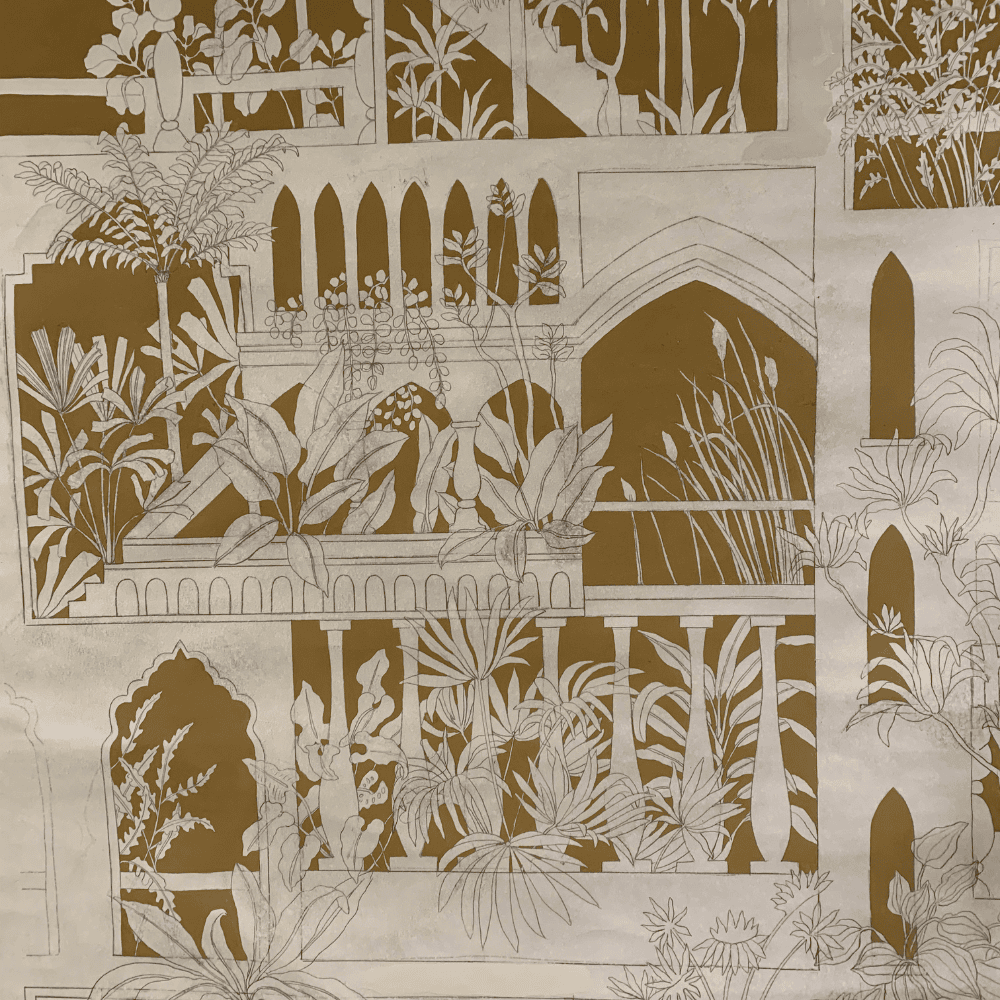
Peacock Arches draws on Mughal miniatures and architectural references, particularly the work of American architect James Renwick. Repeating arches provide a strong structural framework, while peacocks introduce movement and ornament. The layout was tested repeatedly at scale, printed and adjusted until the balance felt resolved. Once confident in the structure, foliage and trellis elements were painted in. Towards the end of the process, peacocks were added as a playful final layer, partially concealed behind windows to reward closer viewing.
ABANDONED ARCHES
Design Story
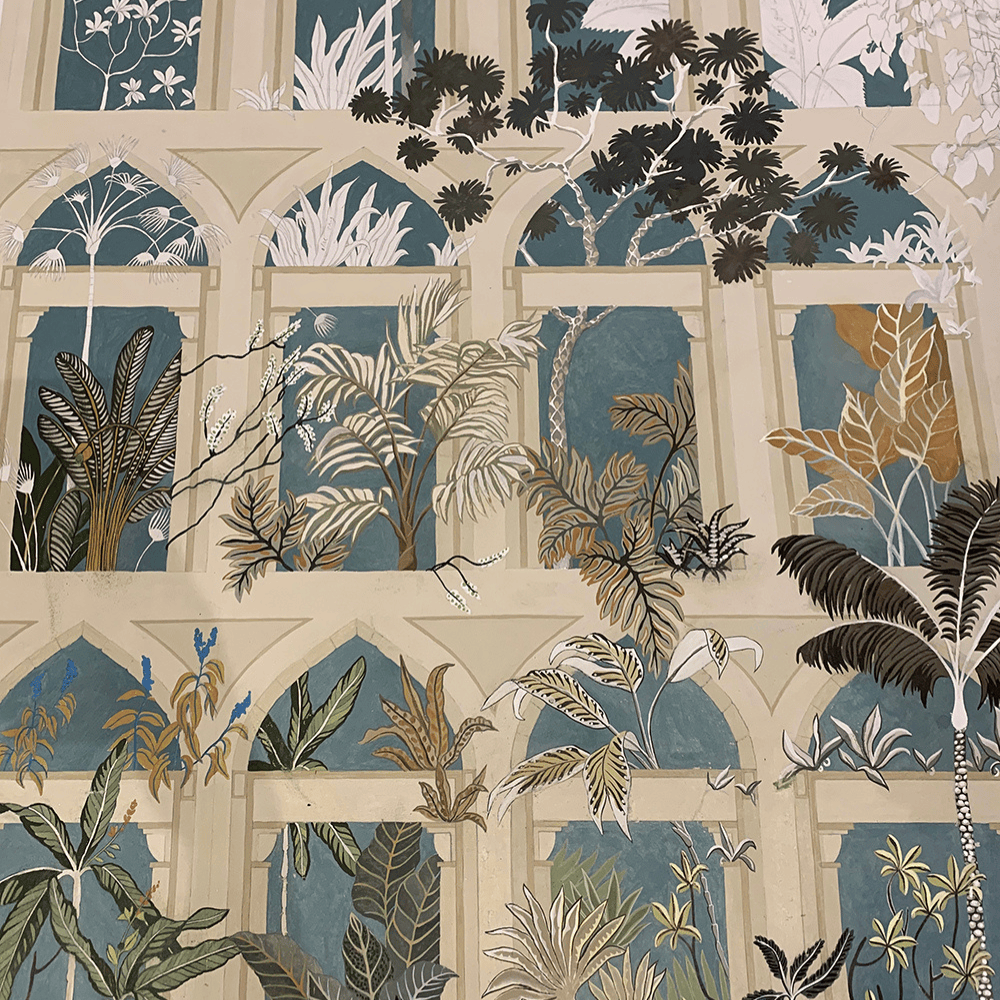
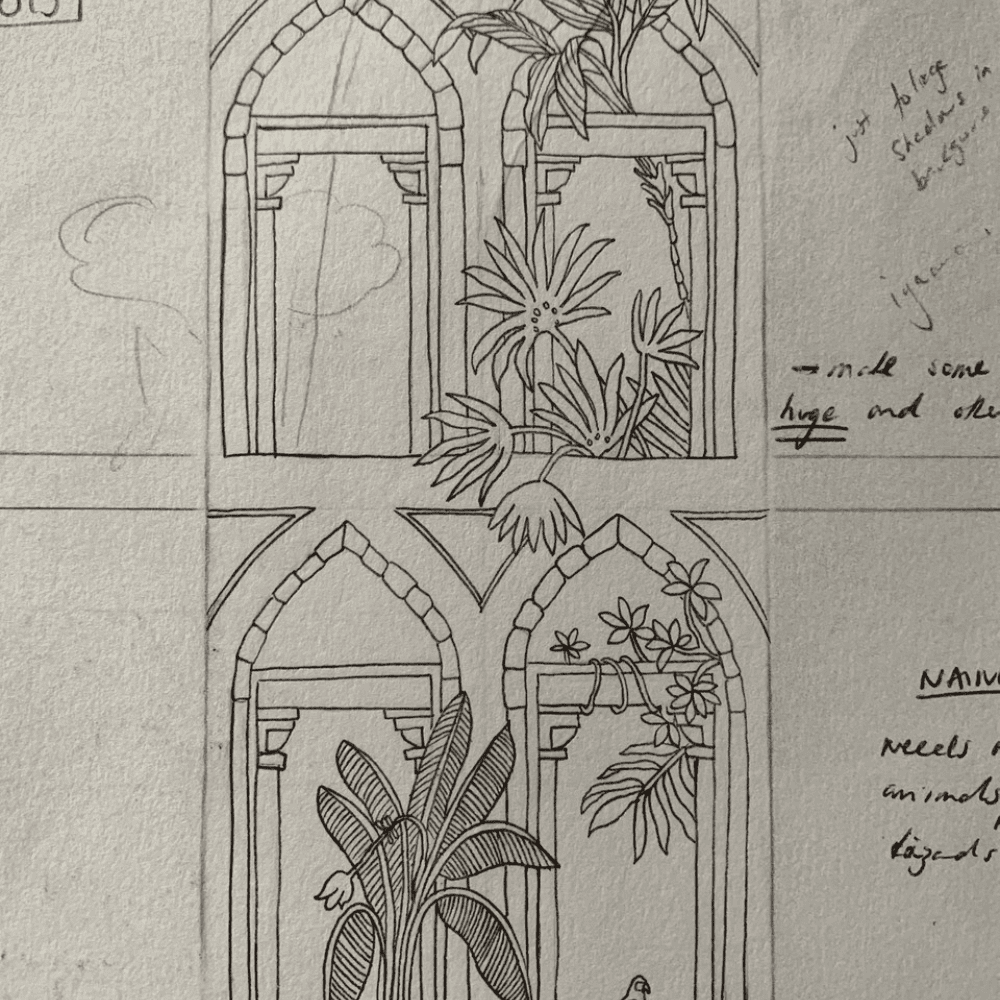
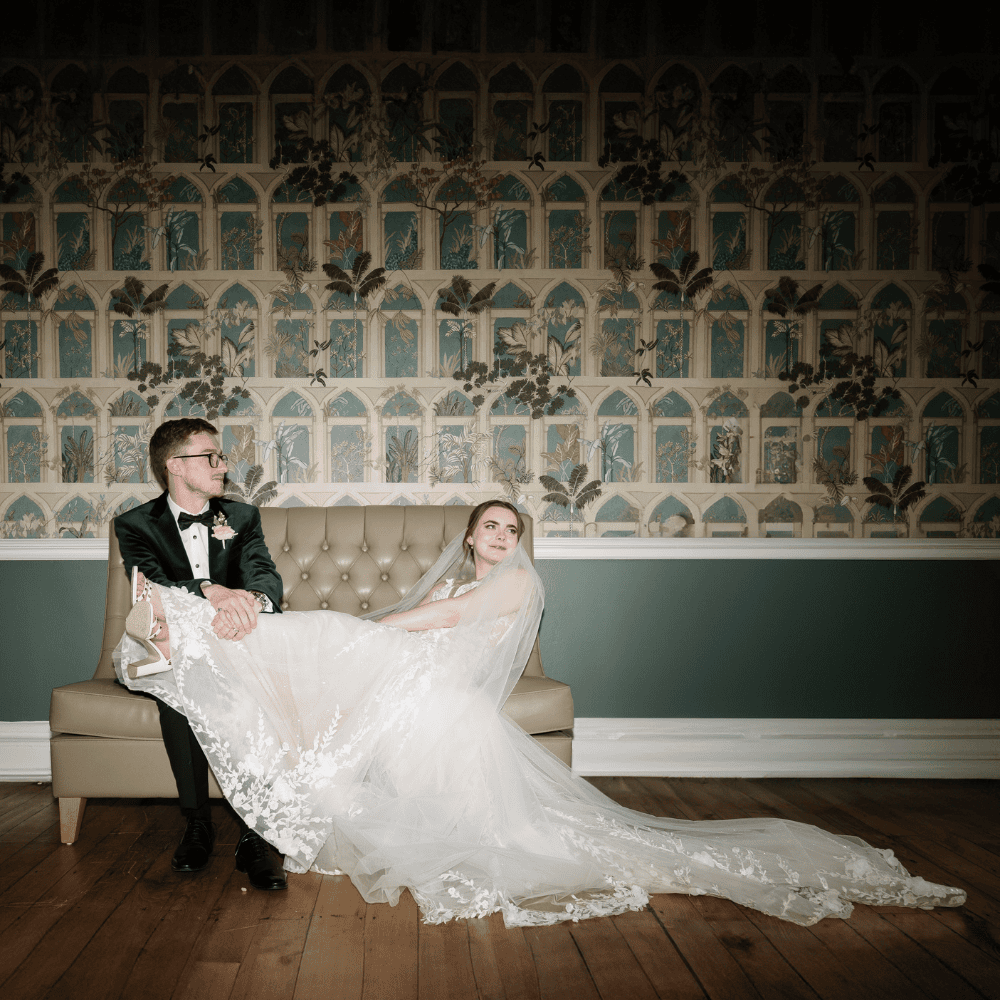
Abandoned Archways references antique architectural prints, softened and reclaimed by foliage. Related in spirit to Peacock Arches, this design introduces sky above and is sold as a panel. It began as a tiny sketch, no larger than 5cm square, and gradually evolved into a large-scale mural. Painted over several months, it was one of the most meditative works in the collection. Trees and leaves were layered slowly over the architectural forms, allowing the painting to feel gentle rather than overworked. The original colourway was retained, as it offered the best balance between structure and softness.
Labyrinth
Design Story
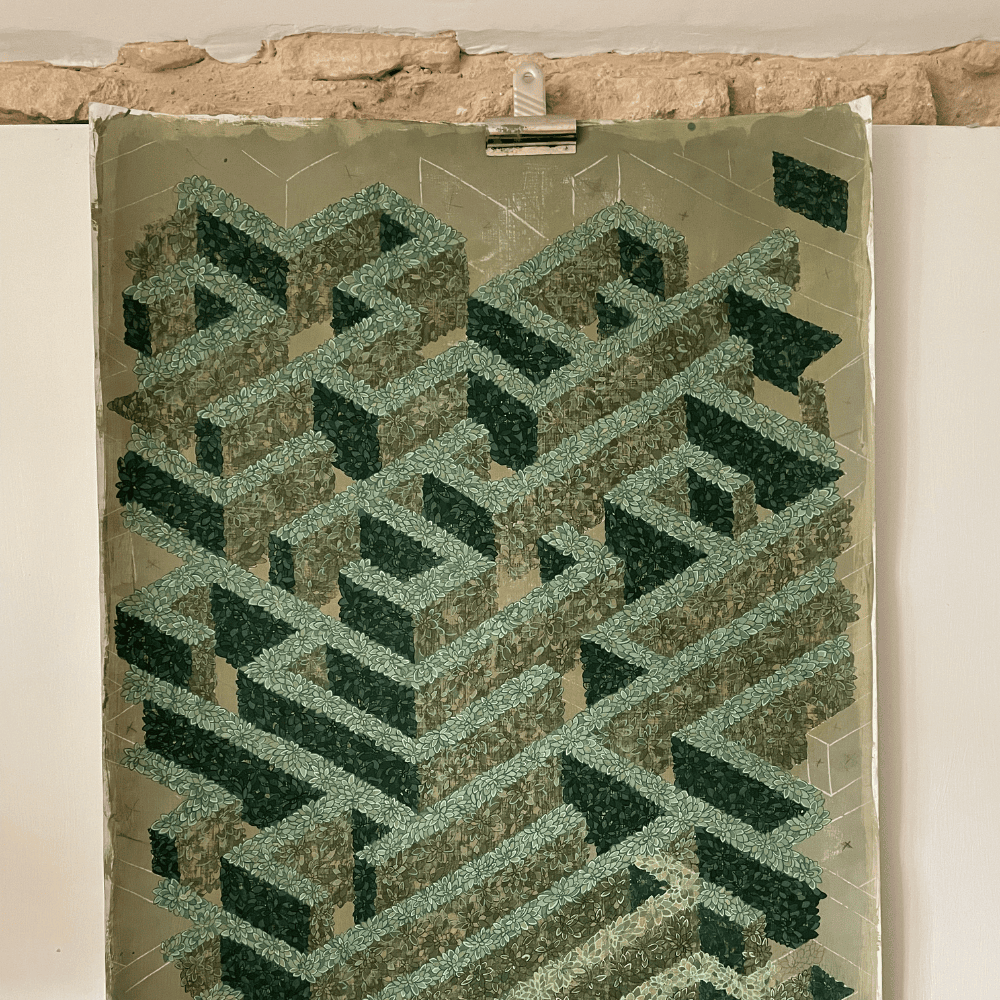
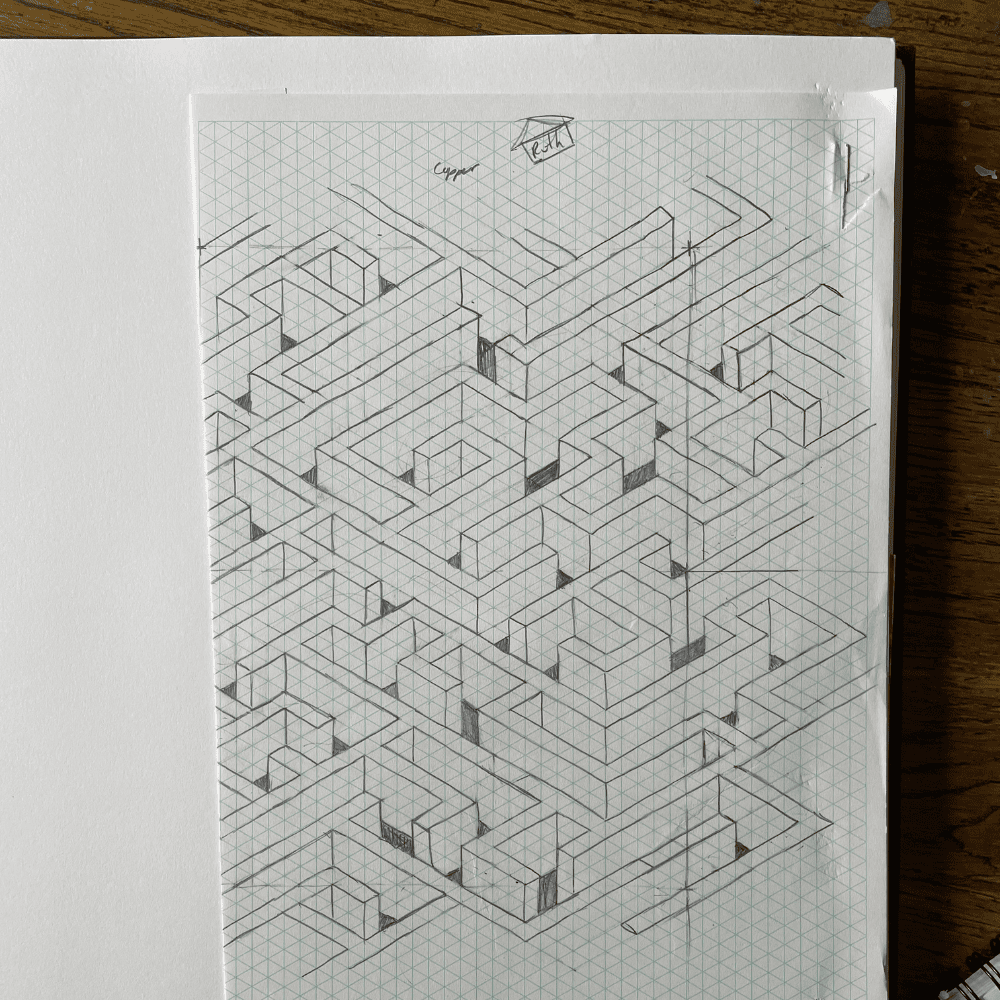
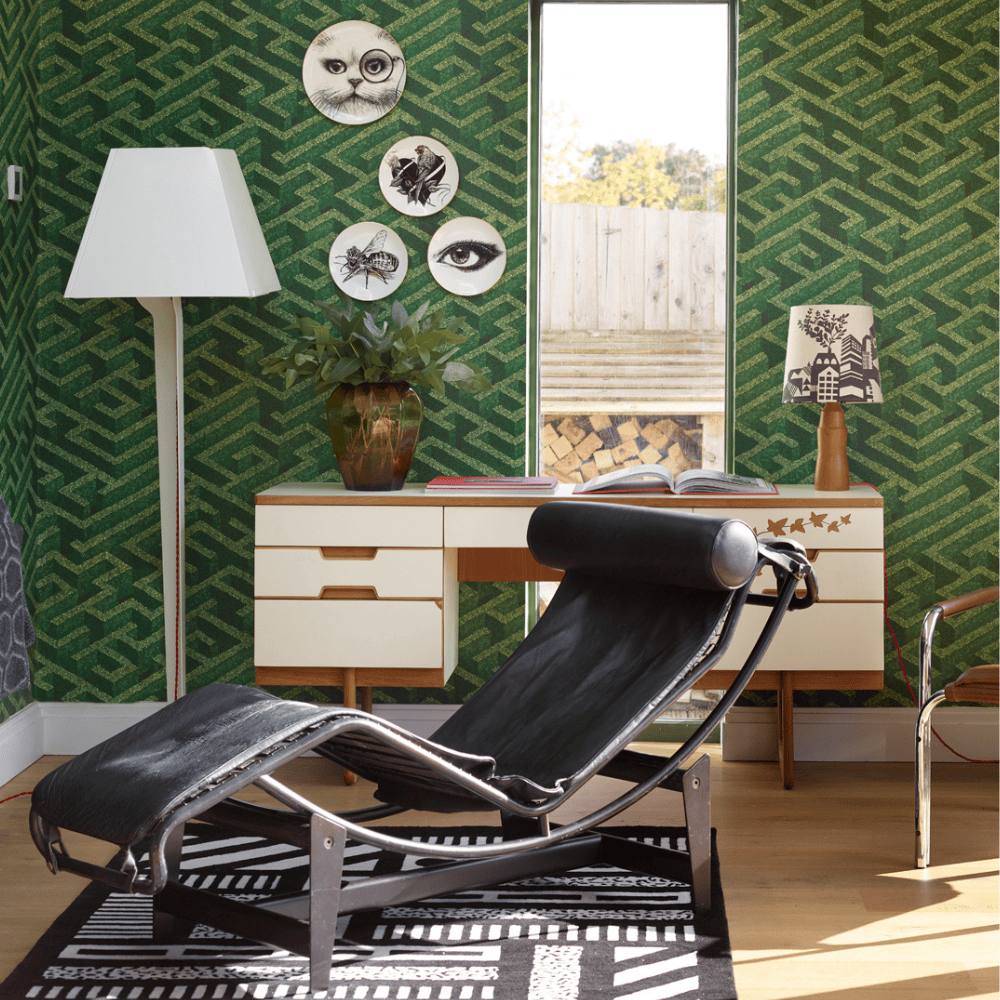
Labyrinth is a captivating geometric wallpaper that plays with depth and perception, creating a subtle three-dimensional maze across the wall. Inspired by the mathematical vision of M. C. Escher, the design draws the eye while maintaining a refined, architectural quality.
Intricate leaf formations, influenced by Mughal miniature painting, soften the structure and introduce a layer of craftsmanship. The design can stand alone as a sophisticated geometric, or be specified with squirrels, ostriches, or deer for a more playful expression.
Versatile yet distinctive, Labyrinth suits interiors that call for character, depth, and quiet originality.
PALM GROVE
Design Story
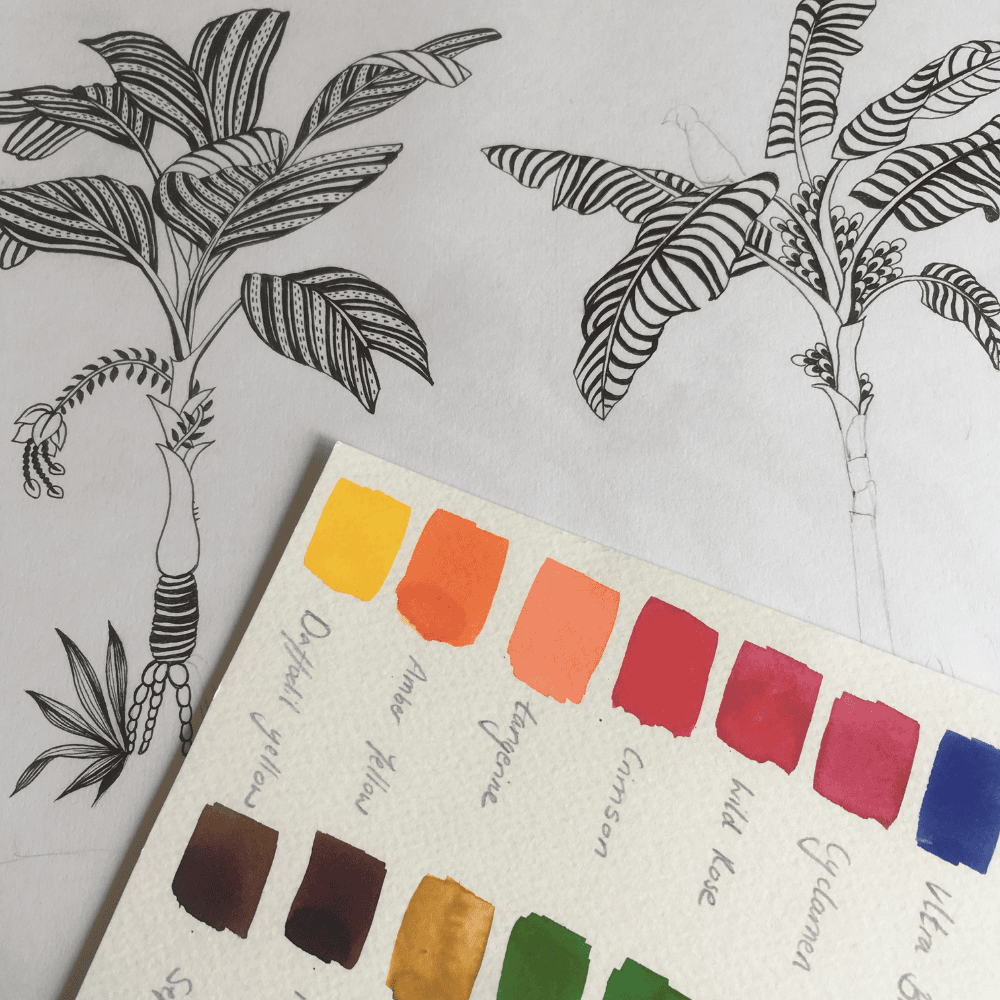
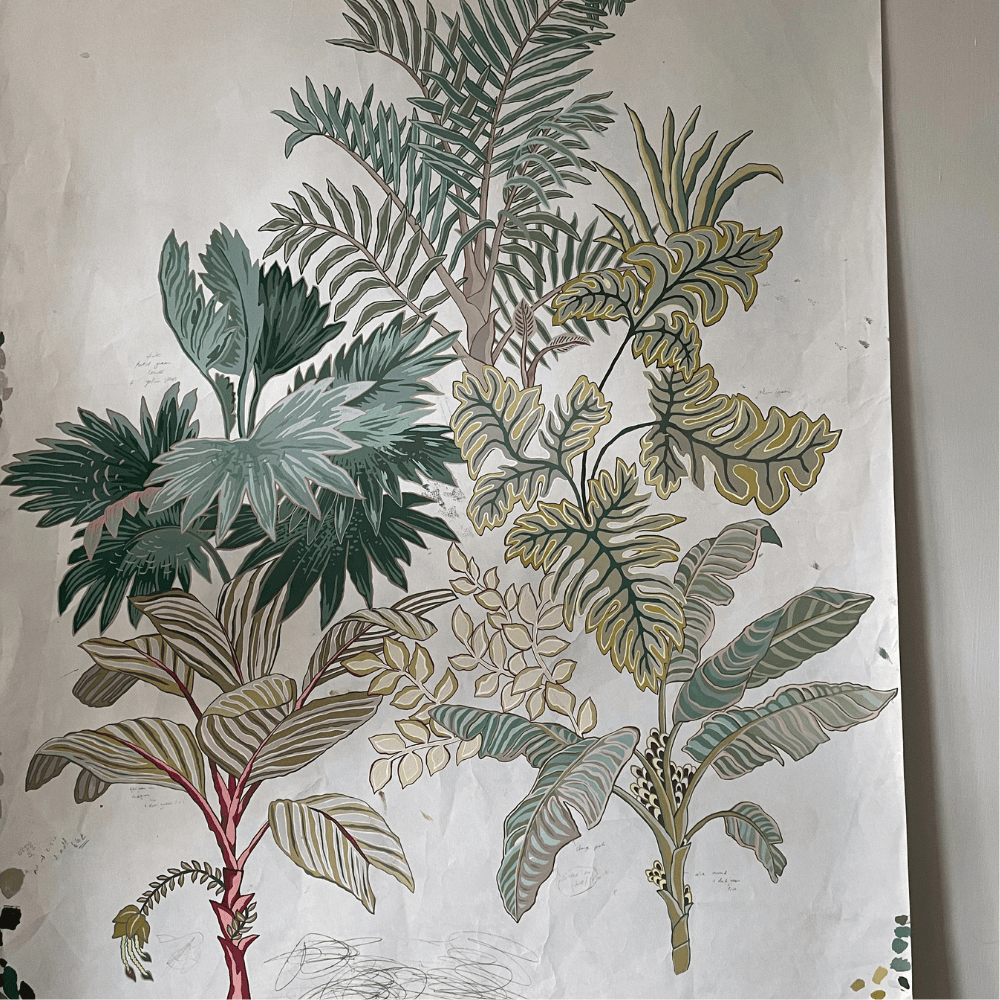
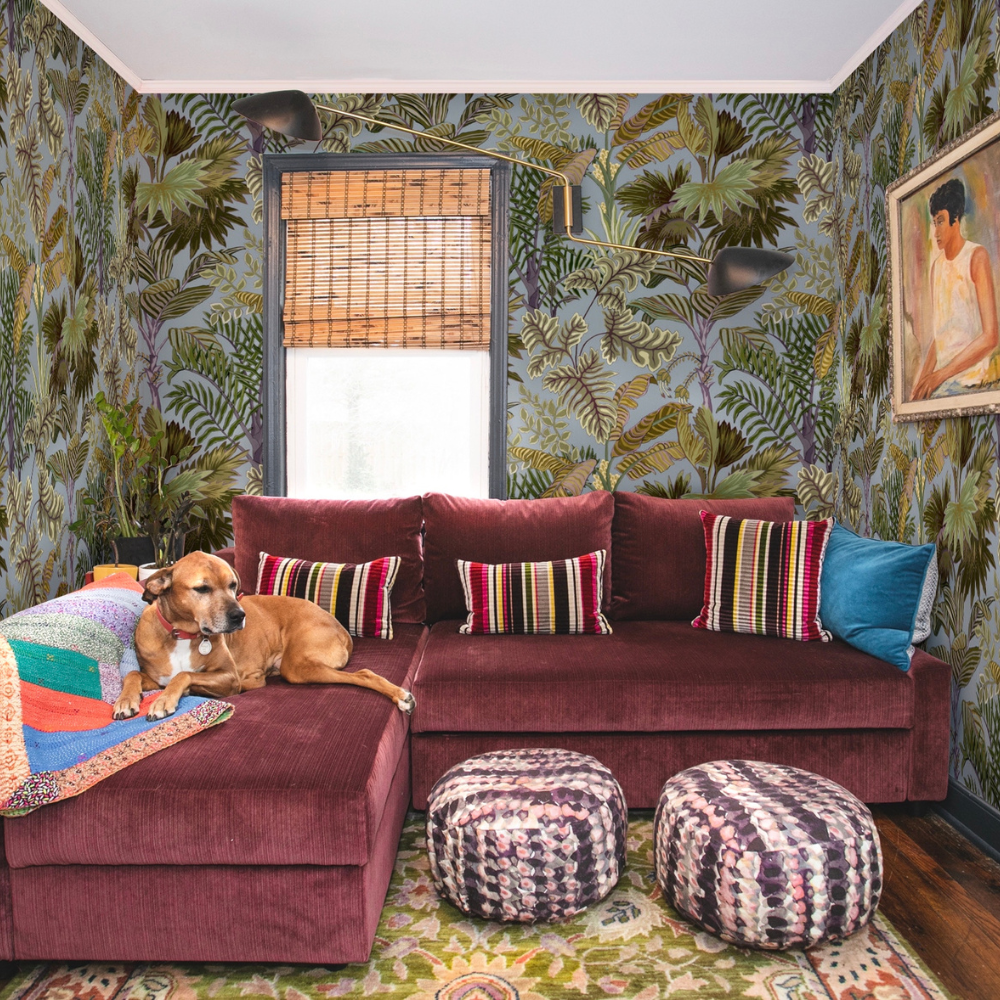
Finally, Palm Grove was inspired by historic botanical palm prints. Painted in gouache, it celebrates the bold simplicity of palm forms while retaining the softness and depth of hand-applied paint. The design began as a pen drawing before being scaled up and repainted in blocks of colour. Gouache allowed for strong, confident shapes while still preserving a painterly surface. Multiple colourways were explored, resulting in a final selection that includes both vibrant and darker, more atmospheric options.
Collection Stories
Collection Stories